


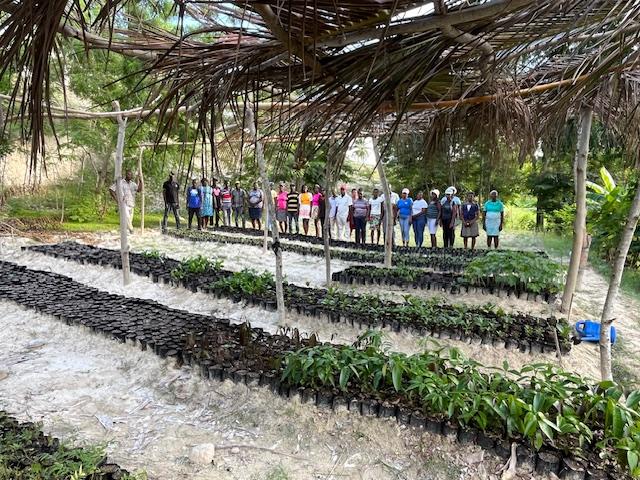
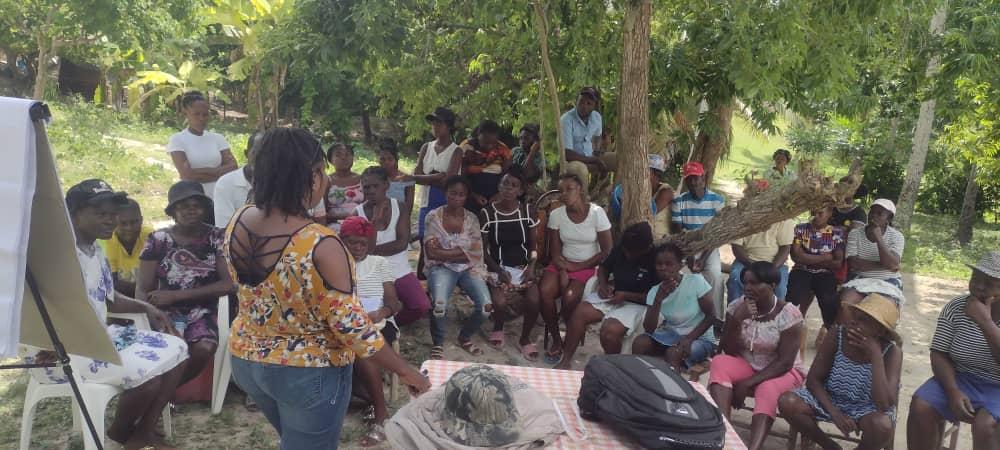
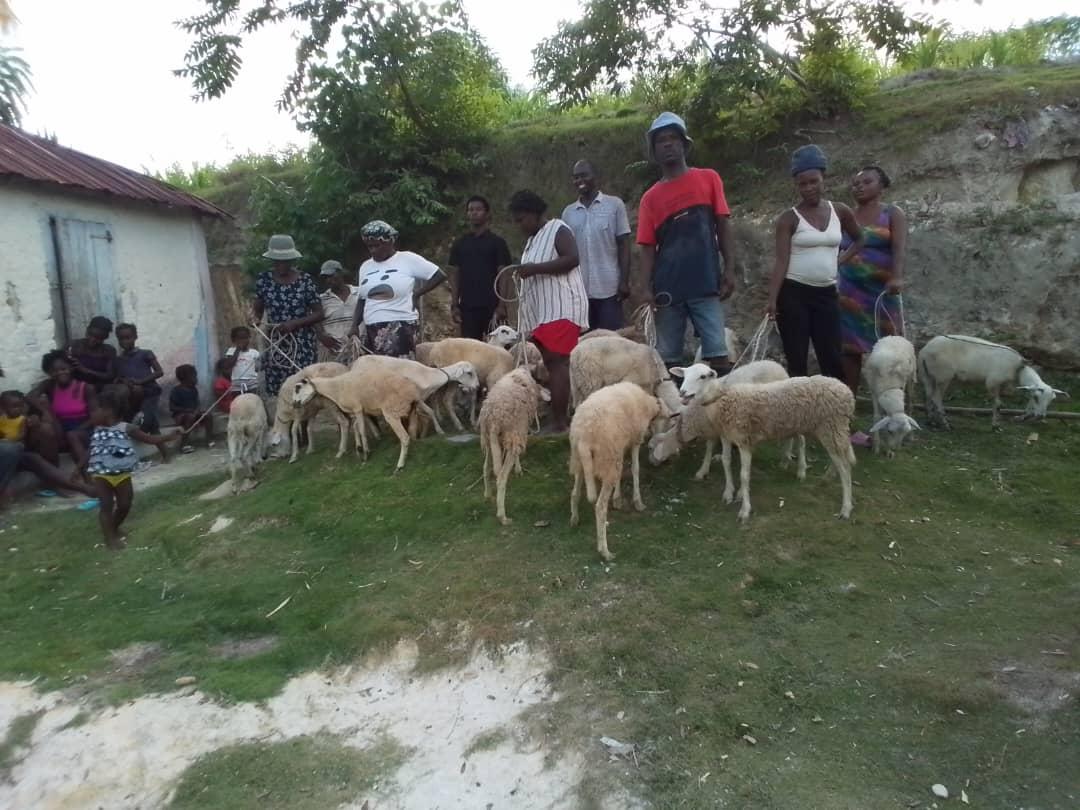

Quixote Center’s work in Haiti prioritizes systemic change. Our theory of change has three aspects:

  • Economic development initiatives that lead to meaningful and sustainable jobs and income for families and communities;
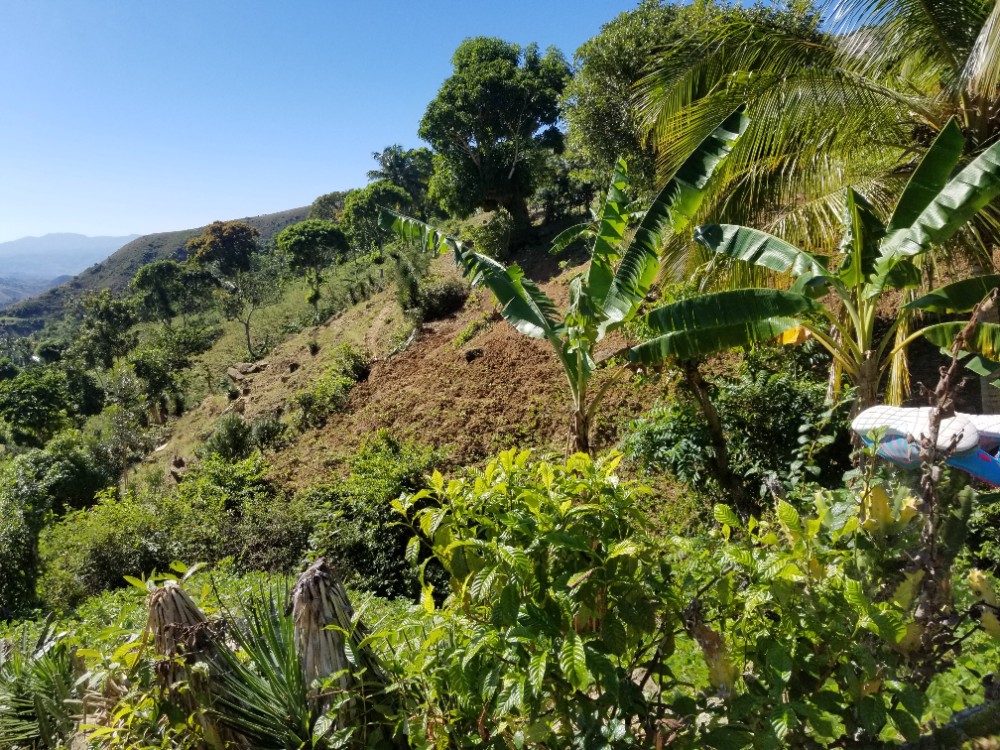
  • Reforestation to preserve Haiti’s environment and protect the soil and watershed;
  • Advocacy to promote US policies that support Haitian democracy and Haitian-led solutions to poverty, gang violence, and migration.


Gros Morne and Grepen

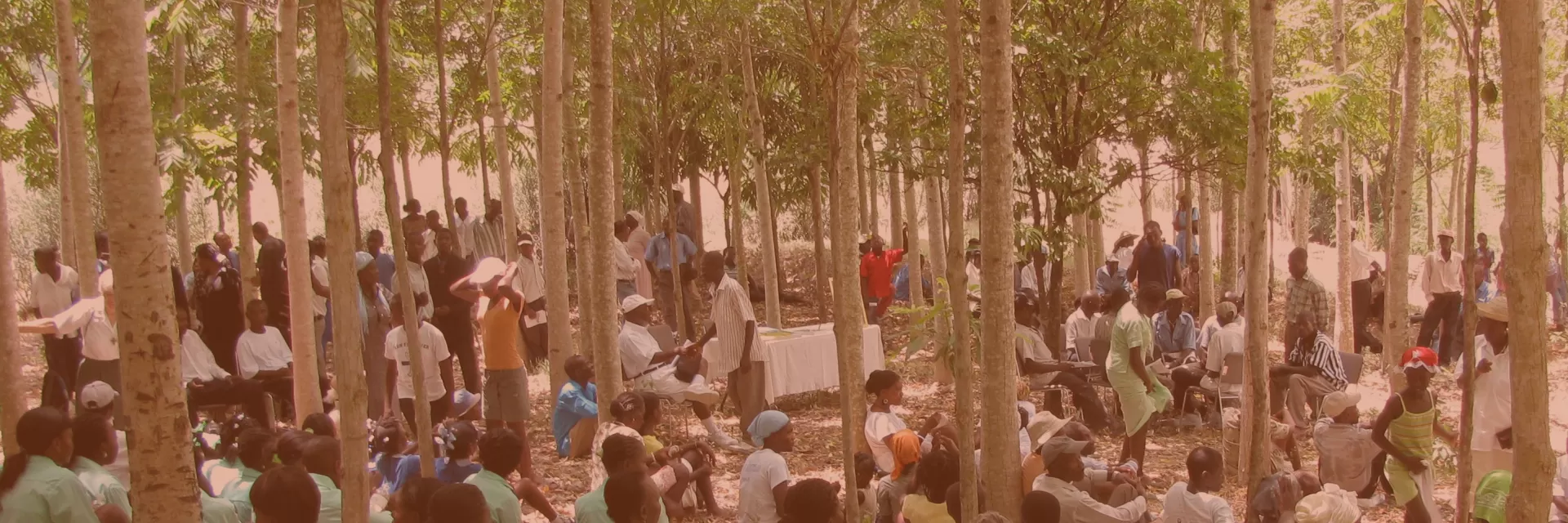
Quixote Center partners with the Montfortain Fathers for a variety of projects in the Gros Morne area. Historically we have supported the Jean Marie Vincent Formation Center, which houses a tree nursery, a model instructional garden and multiple classrooms for training small-scale farmers. With our support, the JMV Center also maintains the Tet Mon model forest, a reforestation project that is the only one of its kind in the region. The JMV team holds formation sessions on reforestation and tree maintenance for local leaders, schoolchildren, and agronomy students.


Quixote Center also partners with the Montfortain-led LaChandle parish to support displaced people who fled to the Gros Morne area as a result of internal violence or deportations. With our support, the parish has sponsored programs to keep children in school and provide child-safe spaces to prevent gang recruitment. We have also provided cash assistance for the parents so that they can start small businesses and stabilize their income.

Developpement Communautaire Chretien Haitien (DCCH)

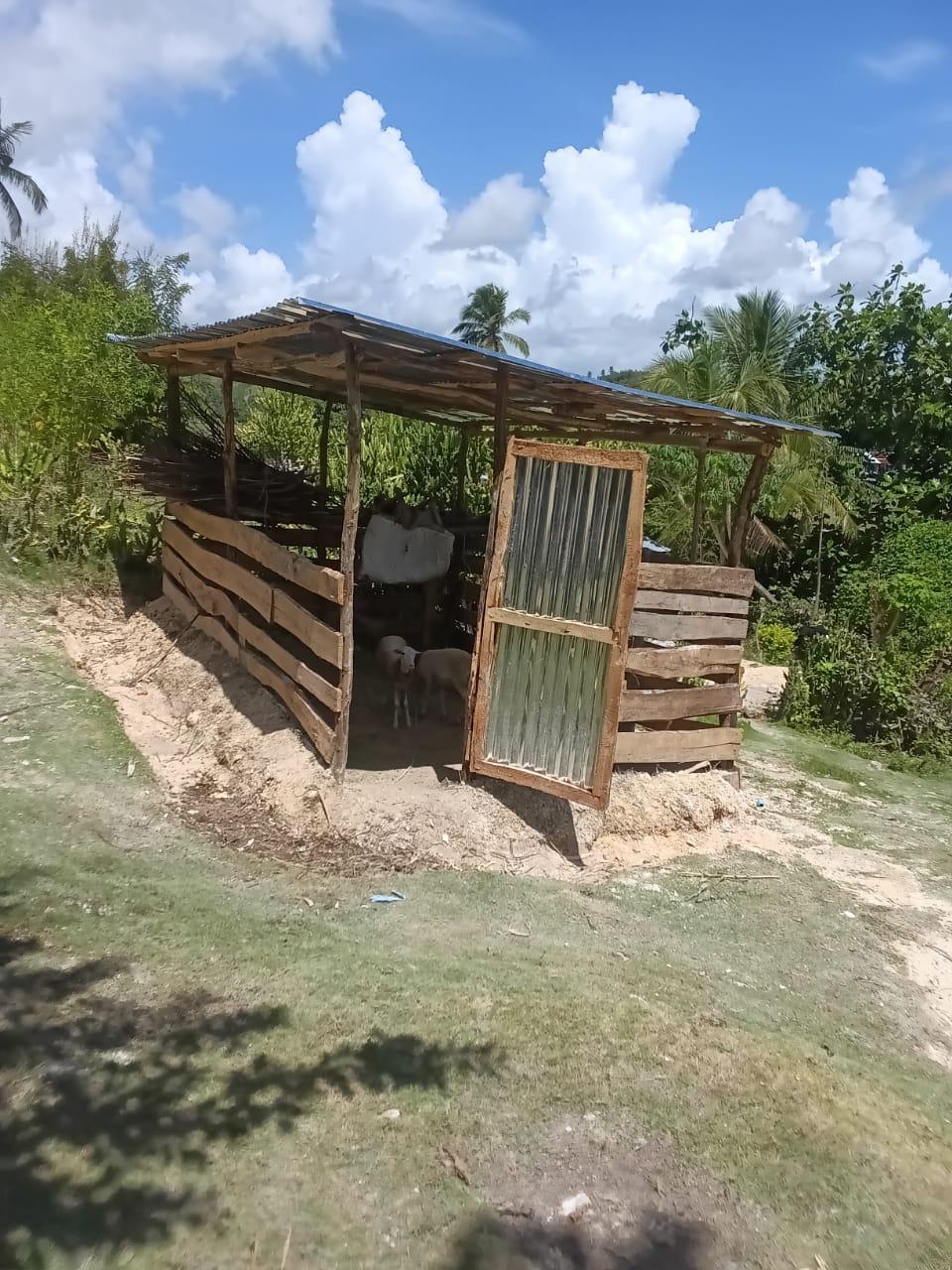
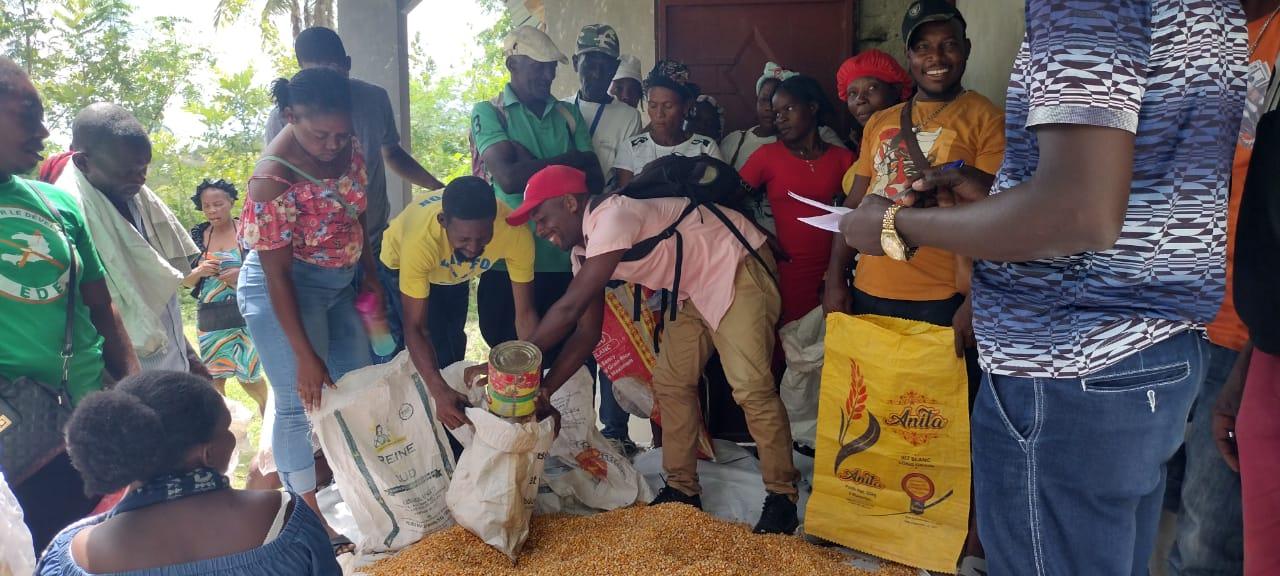
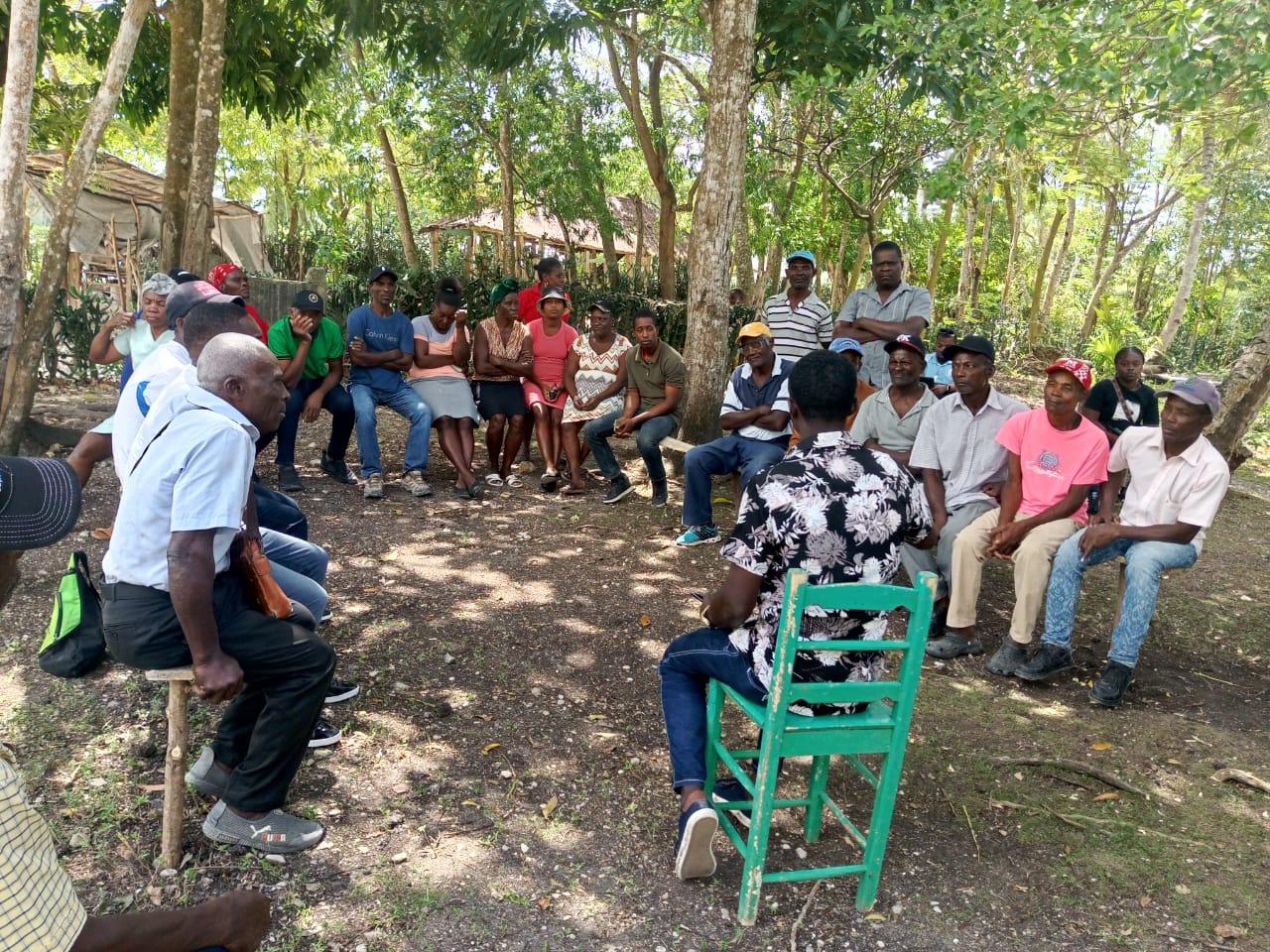
DCCH, a member of Caritas, partnered with Quixote Center in 2023 to conduct a needs assessment among rural communities around Les Cayes to identify investment priorities. After consulting with hundreds of community members through interviews and focus groups, together we designed a project that provides targeted investments in agroecological training, animal care, and women empowerment through microloans and small business ventures.  In 2025, we launched the Socio-Economic Recovery Program as a scalable and replicable pilot project working with 100 rural families reaching up to 1000 people. This community-led initiative aims to improve their income and food security while building resilience and eliminating dependence on outside assistance.  DCCH distributes seeds and livestock as loans where recipients return the same quantity of seeds and the first offspring to the program for redistribution. In 2026 we included an additional 100 families. 

Read the final report from the 2025 pilot 

Yard gardens create food security one family at a time

A long-standing aspect of the training done through our partners at the Jean Marie Vincent Formation Center in Haiti is work with families, typically women, to develop yard gardens or patio gardens.  These are small-scale projects, where family members learn to grow a surprisingly wide variety of vegetables in small spaces.

The current iteration of the yard garden project enrolled 375 new families during the first quarter of the year, with support from the seed bank and training from the agronomy team. Some highlights below:
Amidst the political turmoil, life goes on Gros Morne

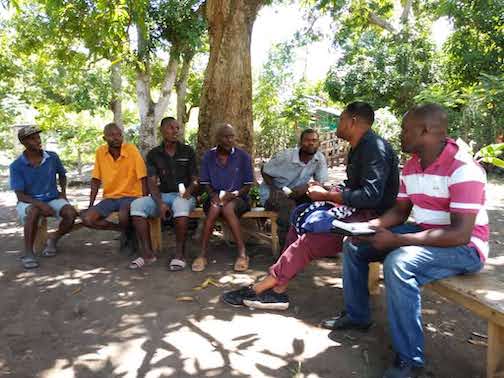
Throughout February, as Haiti was facing an ongoing political crisis that has kept much of the country on edge, work continued. For the agronomy team from the Jean Marie Vincent Formation Center this meant visiting community organizations, presenting workshops, checking in with people and their livestock with the mobile clinic, and talking to farmers about the quality of the recent sweet potato harvest. I capture some of these activities below, with updates from the team. 

[gallery size="full" columns="2" ids="9199,9200,9201,9202"]

Political Crisis in Haiti

As many of you know, Jovenel Moise refused to step-down from Haiti’s presidency on Sunday, February 7, 2021. Moise is arguing that a delay in his inauguration (he did not take office until 2017) means he should serve until February 7, 2022. The United States government and Luis Almagro, OAS General Secretary are standing by Moise. Meanwhile, most of Haiti is not.

Stalemate over Haiti's elections continues

Haiti’s president, Jovenal Moise, and his electoral council have proposed a timeline for elections that include a referendum on a new constitution. At the same time, there is disagreement about Moise’s tenure in office, with opposition leaders and some legal scholars saying Moise should step down on February 7 this year. Moise, disagrees. The timeline his electoral council has submitted assumes he stays in office another year. 

2020 Seed Campaign: Update from Haiti

Although pandemic precautions have not permitted Quixote Center staff to visit our Haitian counterparts this year, we have kept in regular touch with our partners via virtual meetings twice a month. Because of those close connections, we were able to broadcast the need for increasing deposits in the seed bank and many of you truly delivered to meet this need. We received the report below yesterday and wanted to share some highlights with you. 

Updates from the agronomy team in Gros Morne

Several years ago a breed of weevil began infesting sweet potato crops in the area around Gros Morne, ruining many harvests. In response, the team at the Jean Marie Vincent Formation Center went to work developing a weevil resistance strain of sweet potatoes, and have been introducing this to farmers. Below are some photos from a project site in Perou, a satellite nursery for sweet potatoes, Aneus (red shirt) and Teligene (white shirt) check on sweet potatoes. 

New Hens in the Hen House

On 11 August, 2020, the hen house celebrated the one-year anniversary of the arrival of the first 1,000 hens. The hen house provides low-cost eggs to community groups for resale in the local market. The Quixote Center helped fund the solar powered water pump for the hen house. The hen house is committed to using feed that is 100% grown locally. This is a goal that is close to being met.

Political violence and U.S. policy in Haiti


The notorious paramilitaries of the past, the Tonton Macoute and FRAPH may be gone today, but the people of Haiti are once again under the threat of the presence of armed groups acting with impunity.  The use of armed gangs by political actors in Haiti (and many other places, including the U.S.) to “keep order” is hardly a new phenomenon. However, over the last several years, as protests against the PHTK government have grown, these gangs have been mobilized in what seems a coordinated fashion. They are heavily armed, and have engaged in multiple attacks on communities.

Pages