



Last year our government brutally dismantled USAID, sending shockwaves around the world. The world's largest foreign humanitarian aid provider is reduced to a few remaining programs, including the successful HIV treatment and prevention program PEPFAR, now run by the Department of State. At a cost of less than 1% of the US total budget, many diplomats considered USAID an effective soft power strategy that consolidated alliances across the globe.
Critics of USAID, including Quixote Center, point out that the agency created a self-serving system to secure markets for US food surpluses and to keep large international NGOs well-funded. Recipient communities are left with just enough to survive and to maintain a state of dependency on the aid industry. Quixote Center published our reflections on this matter in a February 2025 blog post.
Frequently called “the republic of NGOs” by its own citizens, Haiti has suffered more than most from aid dependency. Examples include ruining the local food supply by flooding the market with US grown rice, and forcing entire communities off their lands to make way for low paying factory jobs and harsh working conditions. Despite decades of promoting so-called “Haitian-led solutions”, the aid industry still fails to consistently consult the people it is supposed to benefit.
Now that USAID no longer exists, the United States has allocated $125 million toward UN-managed pooled funds to address Haiti’s humanitarian crisis. While the funding aims to address gang violence, the 1.4 million internally displaced people, and food insecurity, details of how the funds will be spent remain opaque. The UN Office for the Coordination of Humanitarian Affairs (OCHA) will manage these pooled funds. If history is any guide, funds will likely be spent on UN and international NGO salaries and per diems. We understand that the internationals working in Haiti mean well, but we question whether that money will actually get to the people who need it most.
What is the alternative? What would a real Haitian-led solution to extreme poverty and food insecurity look like? We designed our programs in the South, in partnership with DCCH (Developpement Communautaire Chretien d’Haiti), with that question in mind. We believe that real support equips communities to reach food sovereignty, pay for the education of their children, meet basic needs for human dignity, and break the cycle of foreign dependence.
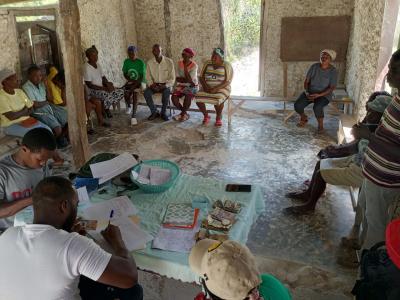
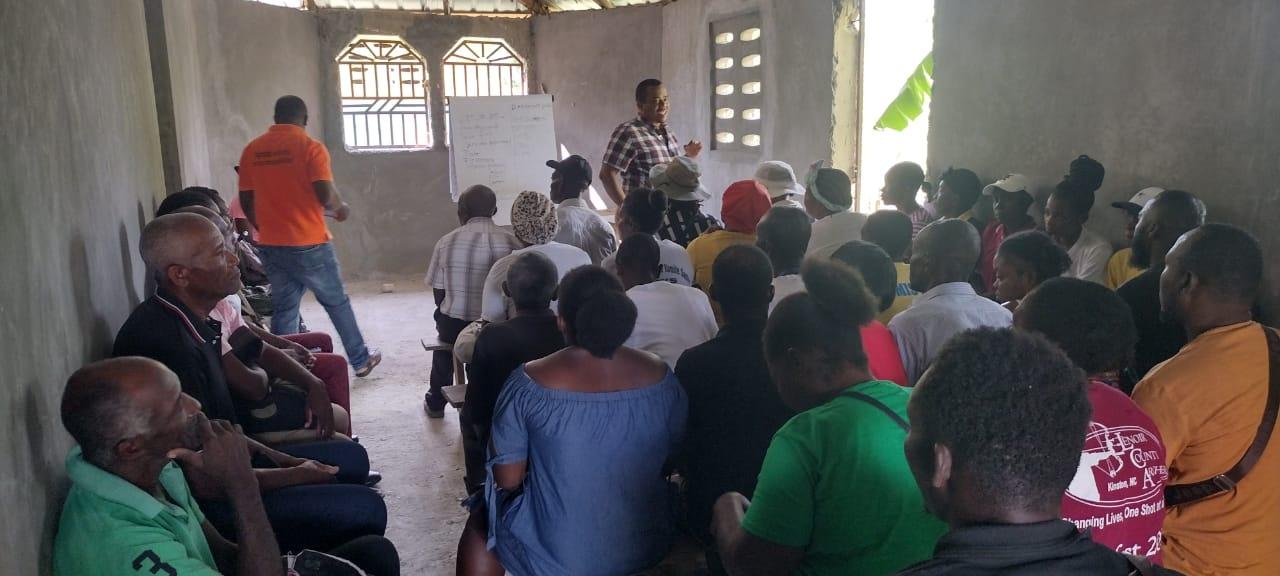
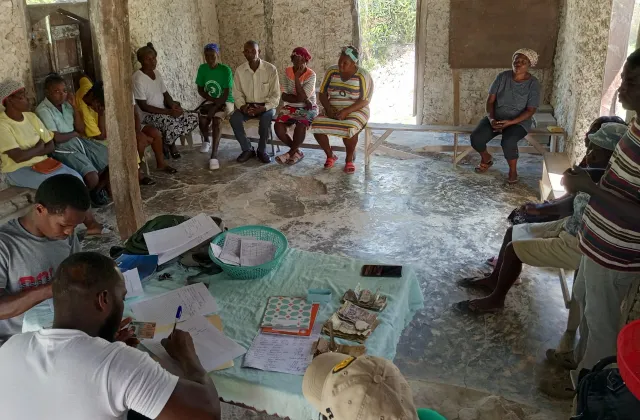
For a fraction of the cost of big international development programs, DCCH and Quixote Center launched the pilot socio-economic recovery project in January 2025 in Les Cayes. It began with a community consultation process, with interviews and focus groups including over a hundred community members to understand their needs, hopes and dreams. The 2025 pilot reached 100 participant families who decide for themselves what seeds they will sow on their land, which animals they will raise, and the type of microfinance they will access. They identified their goals, and the project designed metrics for success based on those goals.
Key components of the program include:
-
Loans instead of handouts. Seed and livestock recipients return the same quantity of seed and the first offspring back to the program to reach more farmers in the community.
-
Building cohesion. To receive livestock, farmers build enclosures to avoid free-roaming animals that damage crops and lead to conflicts amongst neighbors.
-
Support for small commerce. Mutual Solidarity groups (MUSOs) provide access to small loans that empower Haitian women to start or grow small businesses.
-
One-time investment. Quixote Center invests funds over two years and then moves to the next community. Recipients are responsible for sustaining their progress.
Results are encouraging (read the 2025 Report here). The program is designed to be expanded and replicated to other parts of Haiti.
Not only is this initiative Haitian-led, it is also data driven. DCCH and Quixote Center are implementing rigorous data collection and analysis to measure the real impact and help guide future decisions. As a result of Quixote Center’s insistence on rigorous metrics measuring impact, DCCH is a stronger institution. They recognize the value of having reliable data to validate their work, and are now conducting internal evaluations of their other programs with the same rigor and precision.
Decades of a top-down approach to development have failed to bring about durable change. Haitians are the most resilient people any of us have ever known. They deserve better from outside investment. Haitian-led solutions include trusting Haitian organizations, community leaders, and families to know what they need and to manage their own funds and development.


Comments
celeste kearney (not verified)
I love this idea, and will give $1000.00 to support it. keep up the good work.
Loans instead of handouts. Seed and livestock recipients return the same quantity of seed and the first offspring back to the program to reach more farmers in the community.
celeste kearney (not verified)
I'm stuck in your formating requirement. I'll get out and try to send the money separately.
Sally Buxton (not verified)
I work with a small group in Grand Goave, Haiti and was wondering what the process is for determining which communities are considered for this program?
fred@quixote.org
Hi Sally, thank you for reaching out, Feel free to reach me via email to get more information about this program. fred@quixote.org