
Strengthening the Solidarity Economy Model in Southern Haiti
The World Food Program estimates that 5.8 million Haitians, representing half of the population, are facing acute hunger. The combination of rural exodus, which continues unabated since the 1980s, and low investment in rural development, has led the country to import most of its food. The political and social crisis since the assassination of President Jouvenel Moise in 2021, with criminal gangs taking control of 90% of the capital and large parts of the Artibonite region, has exacerbated the nation’s food insecurity.
The solution to this complex, multi-faceted crisis won’t come in the form of foreign interventions, nor from Haiti’s political and economic elite. The solution will emerge through targeted investments in rural communities that strengthen a solidarity economy, so that Haiti can feed itself and its people can live in dignity and peace. It is in this spirit that Quixote Center initiated a partnership with DCCH (Developpement Communautaire Chretien Haitien) in 2023 with a community-based needs assessment which led to the successful 2025 pilot project.
The 100 farming families who participated in the pilot from the communities of Gouin and Saint-Helene expressed their satisfaction and offered valuable feedback that we are implementing in 2026. The project is also expanding, reaching 100 additional farming families from the communities of Tricon and Archambeau while continuing to engage with the 100 original participants for their second and final year in the program. This two-year term limit avoids dependence while creating sustainable and resilient systems within these rural communities.
The project to support agriculture, livestock farming and the strengthening of social and solidarity economy structure for farming families in the 3rd Section of Laborde, Municipality of Cayes includes four core components.
Social Cohesion Meetings and Capacity Building Training
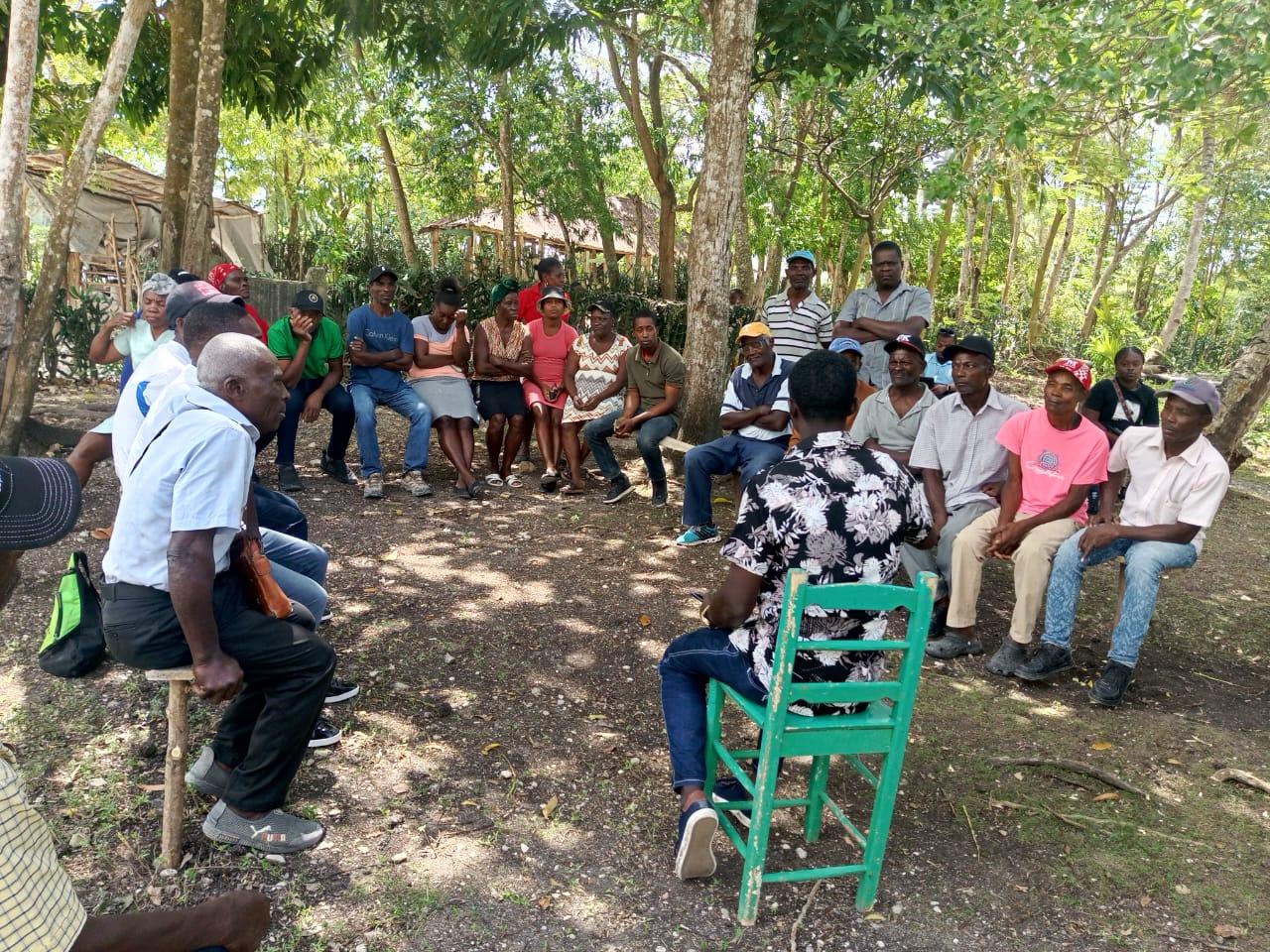
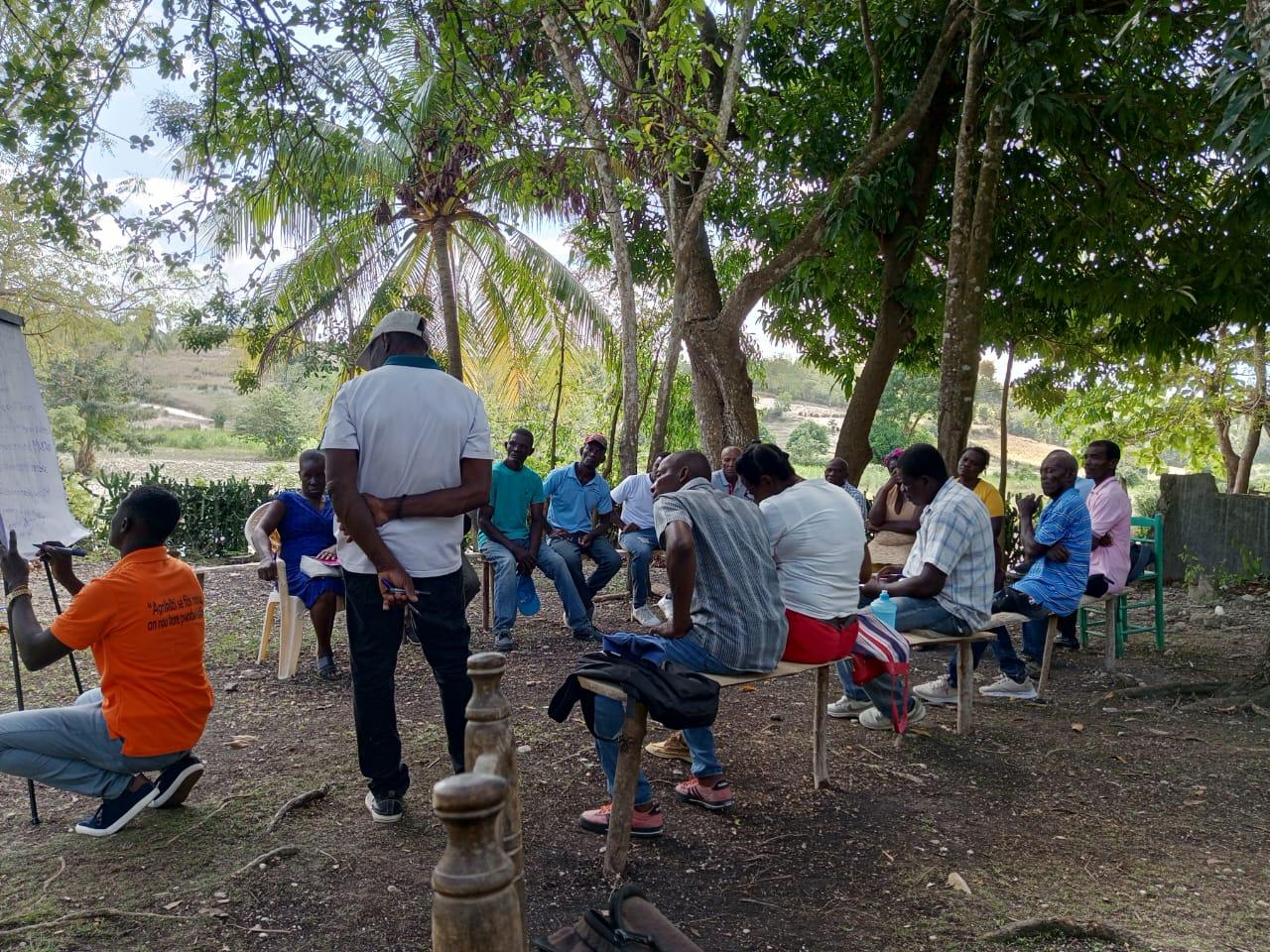
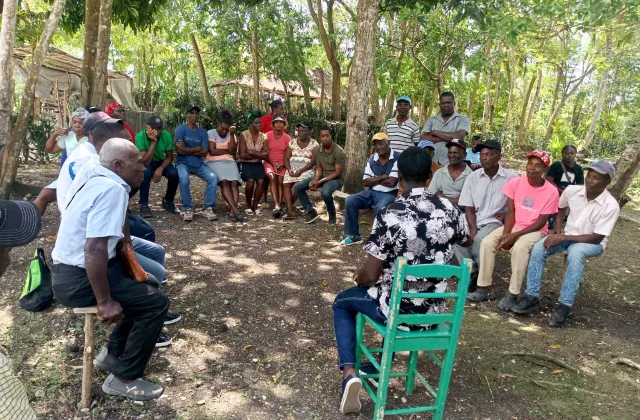
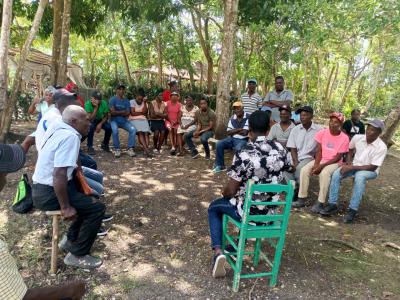
The new participants from the communities of Tricon and Archambeau went through the same onboarding process as the 2025 pilot. Between January and March, DCCH organized a series of awareness-raising and motivational meetings to promote a different type of livestock and crop farming that protects their environment while fostering social cohesion.
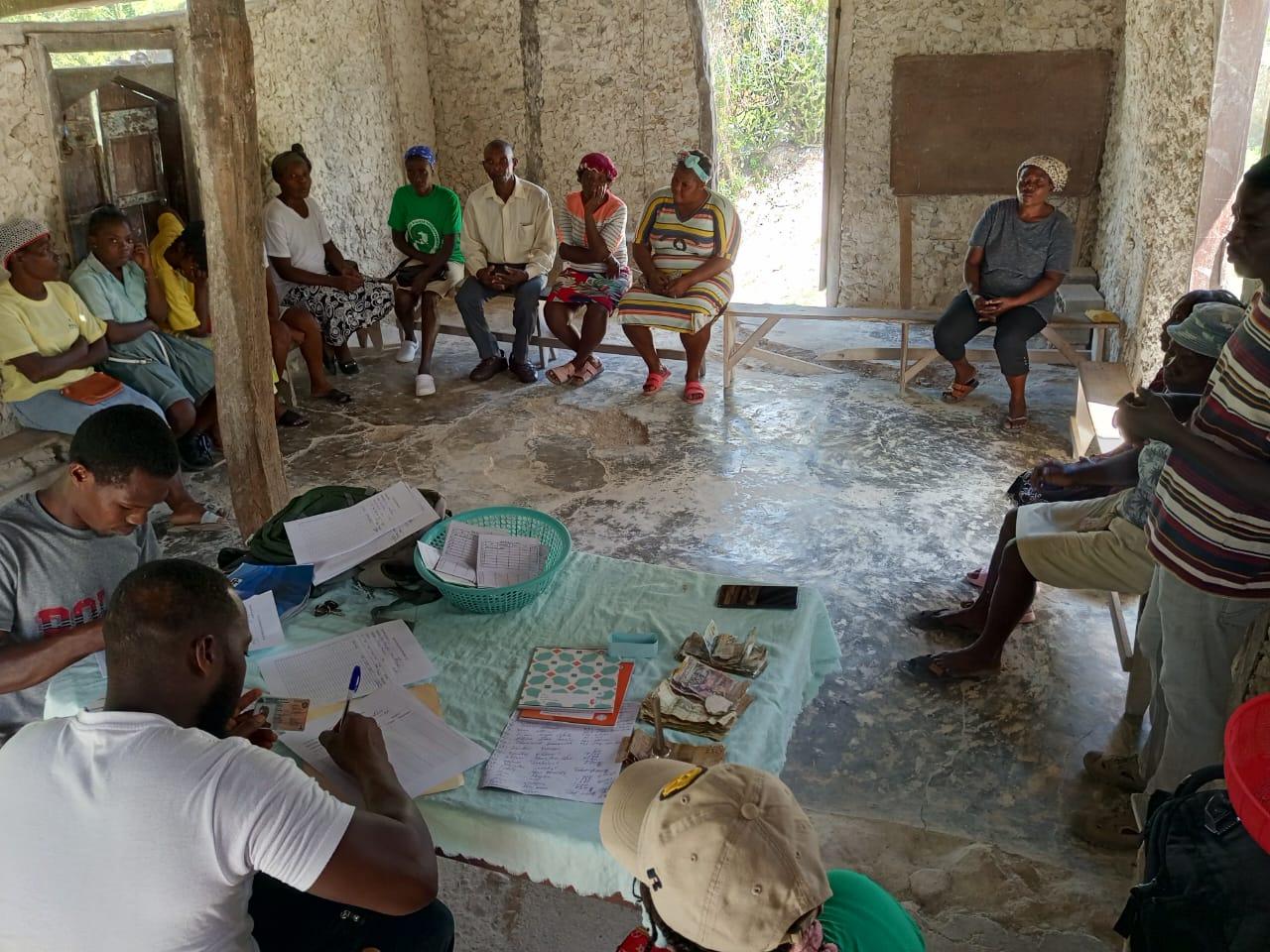
47 participants from the community of Tricon received training on how to set up Mutual Solidarity (MUSO) groups, a type of community bank that gives members access to small loans at a low interest rate. Another 136 community members received an organizational leadership training to become more mindful of their conduct and lead by example.
During the second quarter, in addition to the regular meetings with community members, DCCH carried out a training session with 152 participants to strengthen their capacity to manage and resolve different types of conflicts. Another training workshop focused on seed saving and storage techniques reached 145 participants.
Seed Distribution
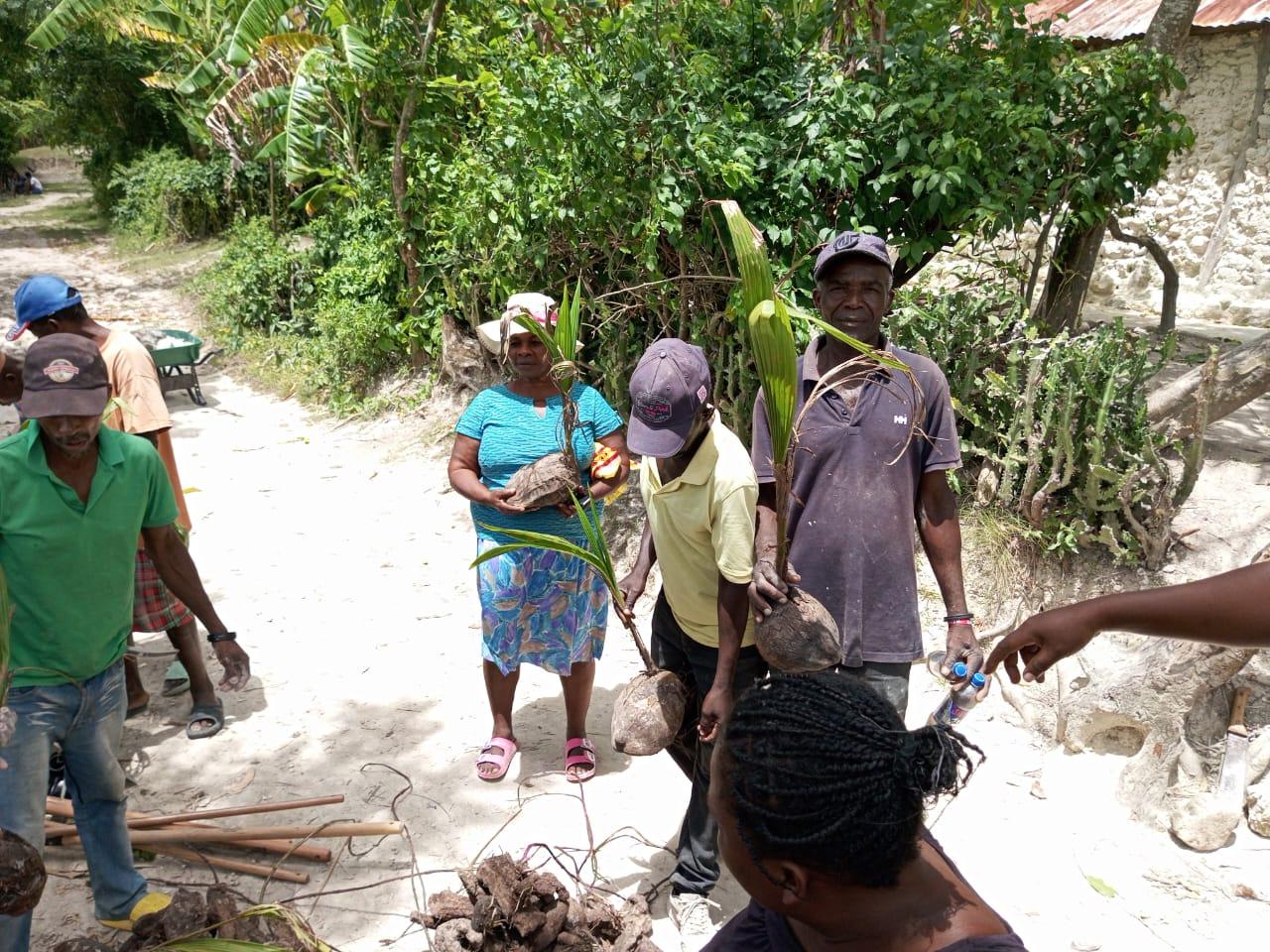
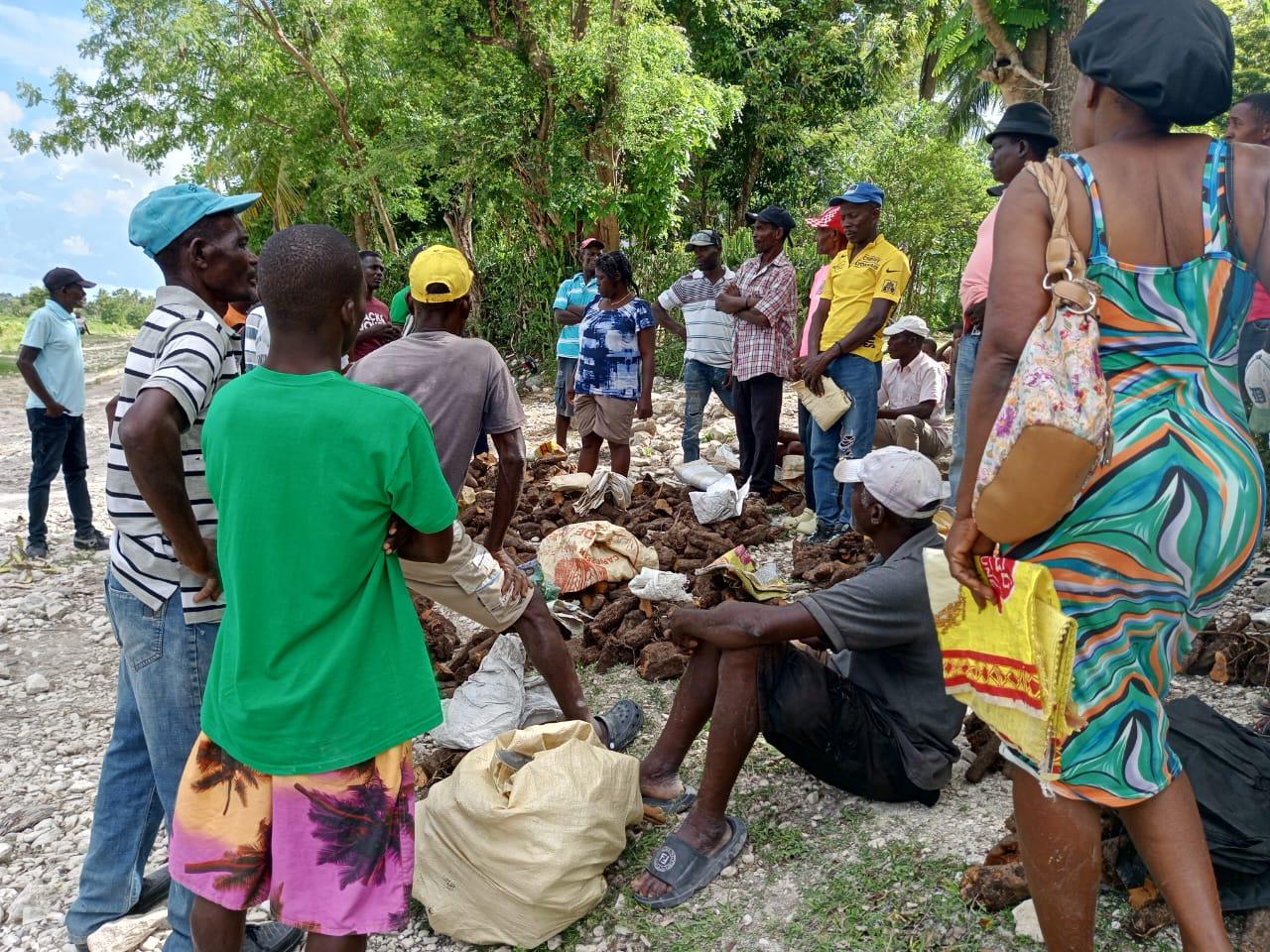
Taking advantage of favorable weather conditions in the first three months of the year, DCCH started distributing seeds in parallel with the meetings and training sessions. Farming families received corn and bean seeds as well as plantain, coconut and yam seedlings. Haitians measure seed quantities in “marmites” or pots which are carefully registered as every farmer at harvest must return the same quantity of seeds to the program to continue the distribution throughout the community.
DCCH technicians and 15 participating families are monitoring the yield and income generation of their corn and bean crops to better understand how to provide sound advice to farmers around best practices to improve their production and revenue. The preliminary results from this study reveal that despite costing more per hectare sowed, beans generate a higher profit margin than corn.
Livestock Distribution
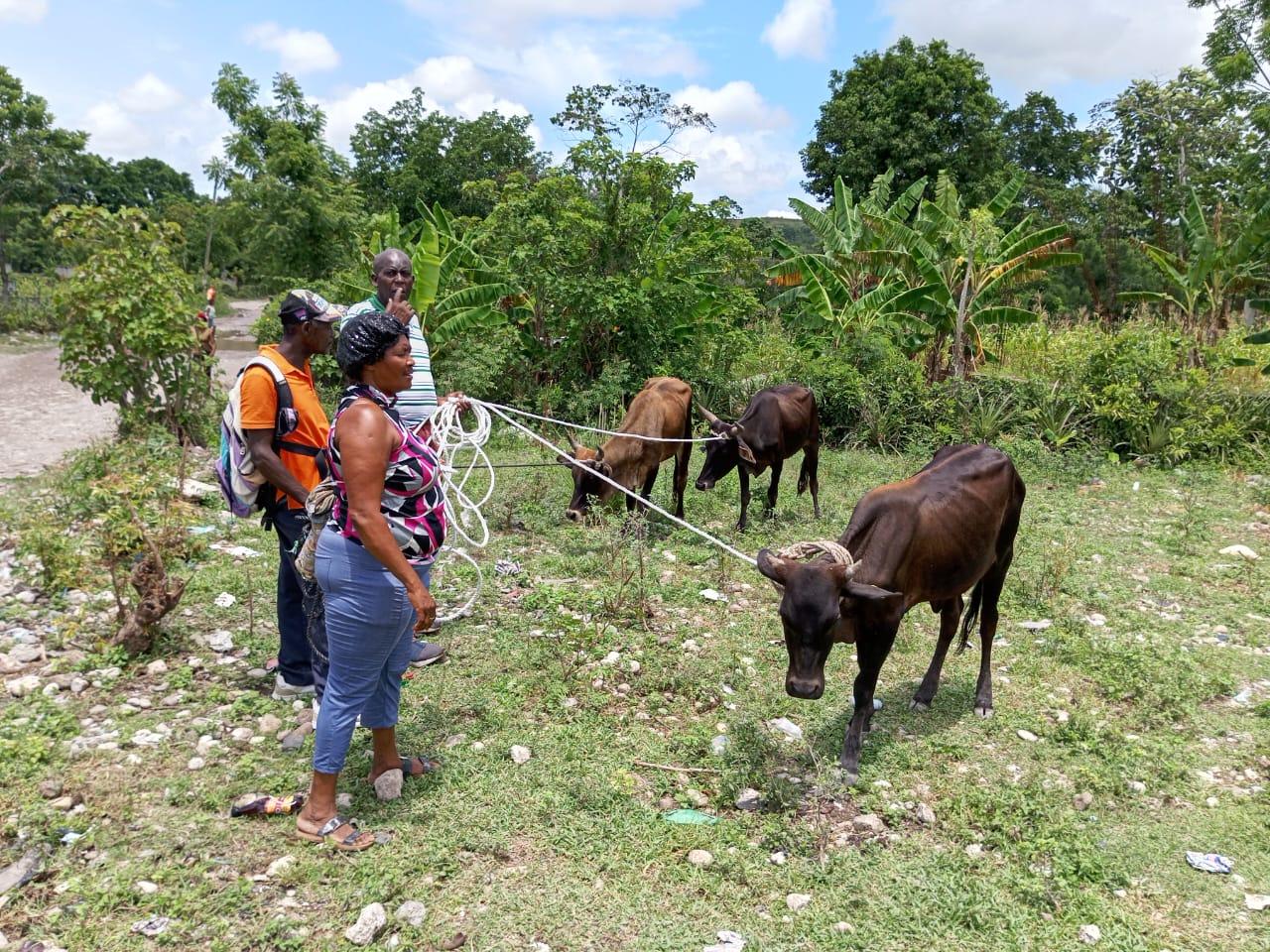
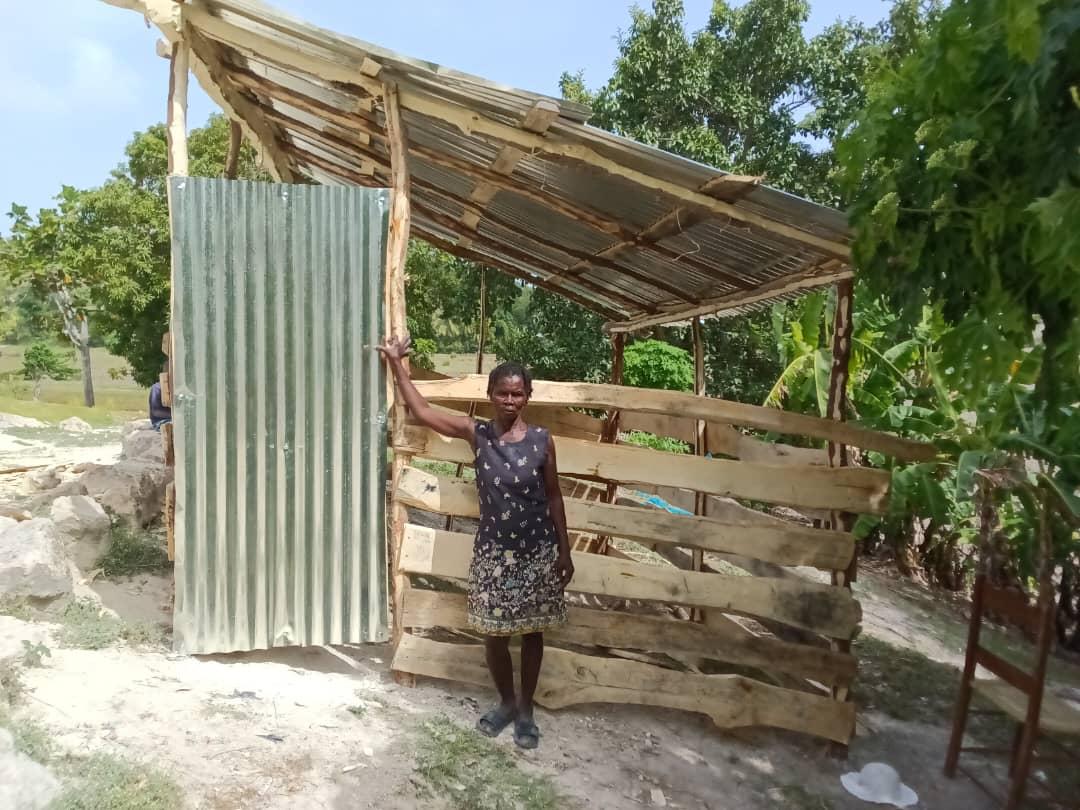
Raising livestock is one of the most important economic activities for Haitian farmers as a source of protein and cash. The 2025 participants from Gouin and Saint Helene continued the distribution of livestock to farmers who build enclosures. Enclosures protect the animals and also mitigate conflict, because it prevents the animals from grazing on and tearing up their neighbors’ lands. 9 of the 12 planned enclosures are complete and they distributed 24 goats. Participating farmers receive all the material they need to build the enclosures, including boards, sheets and nails.
After popular demand, DCCH also began distributing pigs and cows to farming families. Each recipient must return the first offspring to the program to sustain the revolving loan. The multiplier effect from the first distribution in 2025 is already starting; five new families received the offspring from the first cohort of goats.
Mutual Solidarity Groups
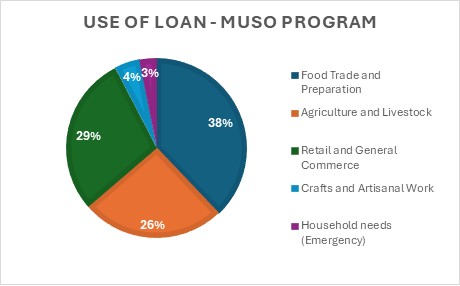
Halfway through the second year of the project, there are six active Mutual Solidarity Groups (MUSOs) with a total of 186 members, of whom 53.8% are women. MUSOs play a key role in the local economy, especially in rural Haiti where access to financial services is almost nonexistent. The loans paid back from the first year of the project paved the way for even more loans in the second year at very low rates.
So far, 66 members have received loans averaging $245.32 USD ranging from $38.25 USD to $1,220.32 USD. The MUSO program enables farmers to diversify their income stream in periods of drought or flood, both of which are frequent in Haiti.
While crucial, this program alone won’t be sufficient to cope with the constant cycle of drought and flood. We need to solve the water problem, or at least mitigate it.
In May 2026, Quixote Center and DCCH launched a water project in Gouin to build a community cistern for both household and agricultural use. We expect to see the impact of this project later this year and will continue to work with our partner toward a long-lasting solution to keep the crops irrigated and the livestock alive.
None of these programs would be possible without your support. On behalf of the communities of Gouin, St. Helene, Tricon, and Archambeau, we thank you.