




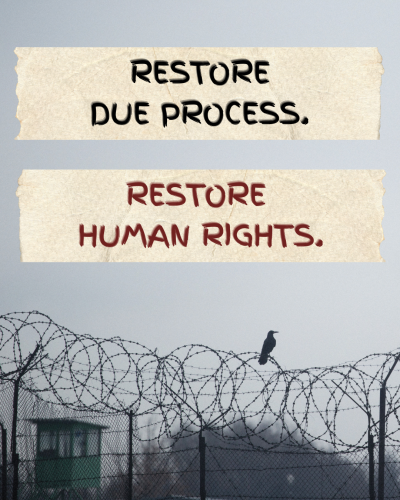
Amidst the chaos of an election year, ICE agents in masks are still hunting immigrants in our streets. Some are ripped away from their families, leaving children without parents and parents without spouses. We have also seen cases of children removed from family, disappearing into the ICE detention system.
980,000 detainees were deported from January 2025 to July 31st, 2026, according to a Migration Policy Institute (MPI) report. Even with "historic lows" at the U.S.-Mexico border, 35 percent of people deported were intercepted and turned around by CBP at the border; an additional 34 percent of detainees were arrested by ICE at the border, processed, and removed from the United States. Another 31 percent were immigration removal cases conducted within the United States, roughly 300,000.
The number of people in ICE detention expanded by 75% from January to December of 2025. By the end of November 2025, ICE was using 104 more facilities for detention than at the start of the year, a 91% increase.
Many of these detainees have resided in the United States for years. After ICE arrests them, most go to a detention center. A few detainees receive ankle monitors or are released while their removal cases are pending. Some that end up in a detention center face inhumane conditions, according to an Amnesty International report.
In Washington, D.C., Chicago, New Orleans, and Minneapolis, Amnesty examined human rights violations by ICE, CBP, and other federal agencies. At three of the four locations, "individuals were held in overcrowded and unsanitary conditions, healthcare services were non-existent, and access to legal representatives was severely restricted," and Amnesty concluded that the treatment "constitutes cruel, inhuman, or degrading treatment."
They've also reported that ICE is misusing field offices, processing centers, and federal office buildings in these four locations for prolonged detention. Prior to this administration, ICE standards on limited hold-room confinement was up to 12 hours, which required inspections, basic sanitation, access to water, food and healthcare, as well as access to legal counsel. Due to "limited transfer options" and "capacity constraints," ICE upped that to 72 hours in June of 2025. Even though these facilities don't have the capacity for overnight stays, they hold detainees for up to 72 hours and sometimes over that, with "severe overcrowding, lack of access to adequate food, water and sanitary facilities such as showers and toilets, complete absence of medical care, and challenges in access to legal representation and due process."
One facility in Broadview, Illinois, currently set up to hold detainees in detention for processing before being moved to a longer-term facility, does not have the capacity to have overnight or extended stay. It does not contain necessities like beds, showers, food, or healthcare. This facility had no infrastructure to house detainees for more than a few hours, and yet they were held for way over 72 hours. Interviewees told Amnesty that Broadview became overcrowded and held over one hundred people each night.
"Broadview had overcrowded, squalid conditions. They're not trying to process people for regular removal proceedings quickly; they're repeatedly telling people to sign voluntary departure. At some point it ceases to be voluntary because you don't know what relief you might have; you have no access to the court, no access to a lawyer. You can't even contact your family. People were forced pretty coercively to sign voluntary departures."
Another report from Human Rights Watch and the ACLU documents horrific abuses in interviews with detainees held at the nation's largest detention center in El Paso, Texas. The report was released in July of 2026 and can be found here.
Detainees can also be placed in permanent detention facilities, like local or private prisons, or already well-established facilities. Governed by the Performance-Based National Detention Standards (PBNDS) or the National Detention Standards (NDS), these facilities are required to uphold basic standards, such as safety, security, order, care, activities, justice, and administration and management. ICE-operated facilities adhere to an ICE hold-room policy that was changed in June of 2025, which loosened the standards and enabled abuses.
Quixote Center is spotlighting individual stories of people detained and deported through our 'Between Borders' series. You can watch the latest episode of Between Borders, 'Victor's Story', here.
Their stories matter.
Add comment