




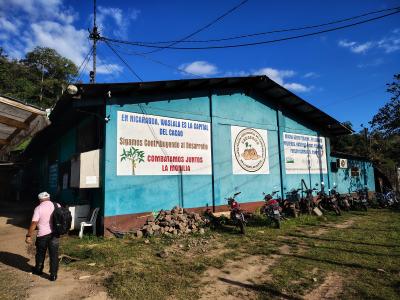
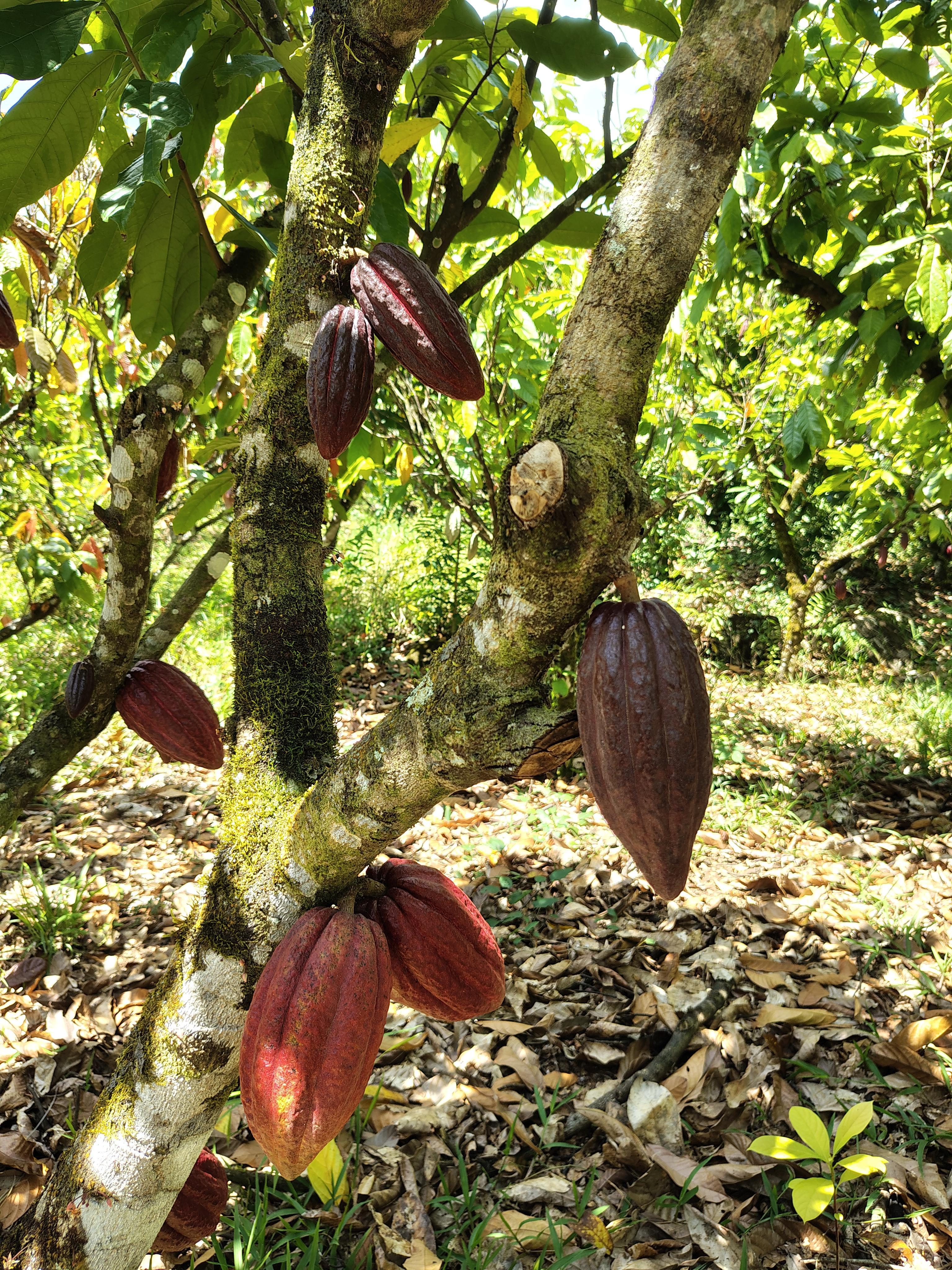
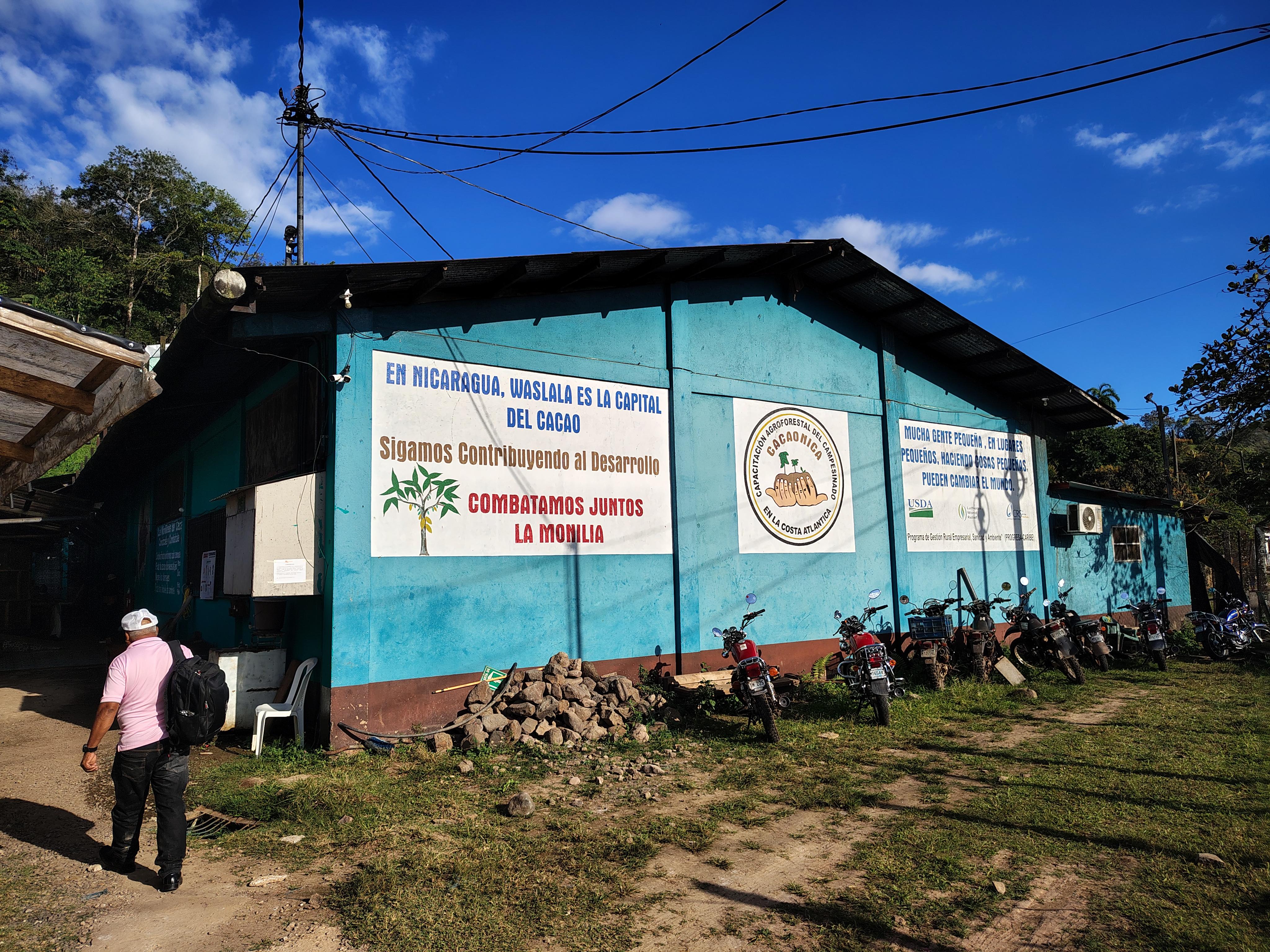
In Waslala, Nicaragua, cacao is more than a crop, it’s a livelihood and a pathway to a brighter future for hundreds of rural families. Yet, despite the region’s importance to cacao production, many farmers face barriers to accessing higher-value markets and improving their economic security.
In August 2025, Quixote Center launched a pilot project to help 40 families in the CacaoNica cooperative meet the requirements for Rainforest Alliance sustainable agriculture certification. Now, we’re renewing our commitment and expanding this work through a new cycle of the Autonomous Community Electrification and Sanitation (ACES) project.
Founded in 2000, CacaoNica has grown to more than 360 members across 42 communities. These remote producers live far from paved roads and the electrical grid, making everyday tasks, from charging a phone to transporting cacao beans, difficult and expensive.
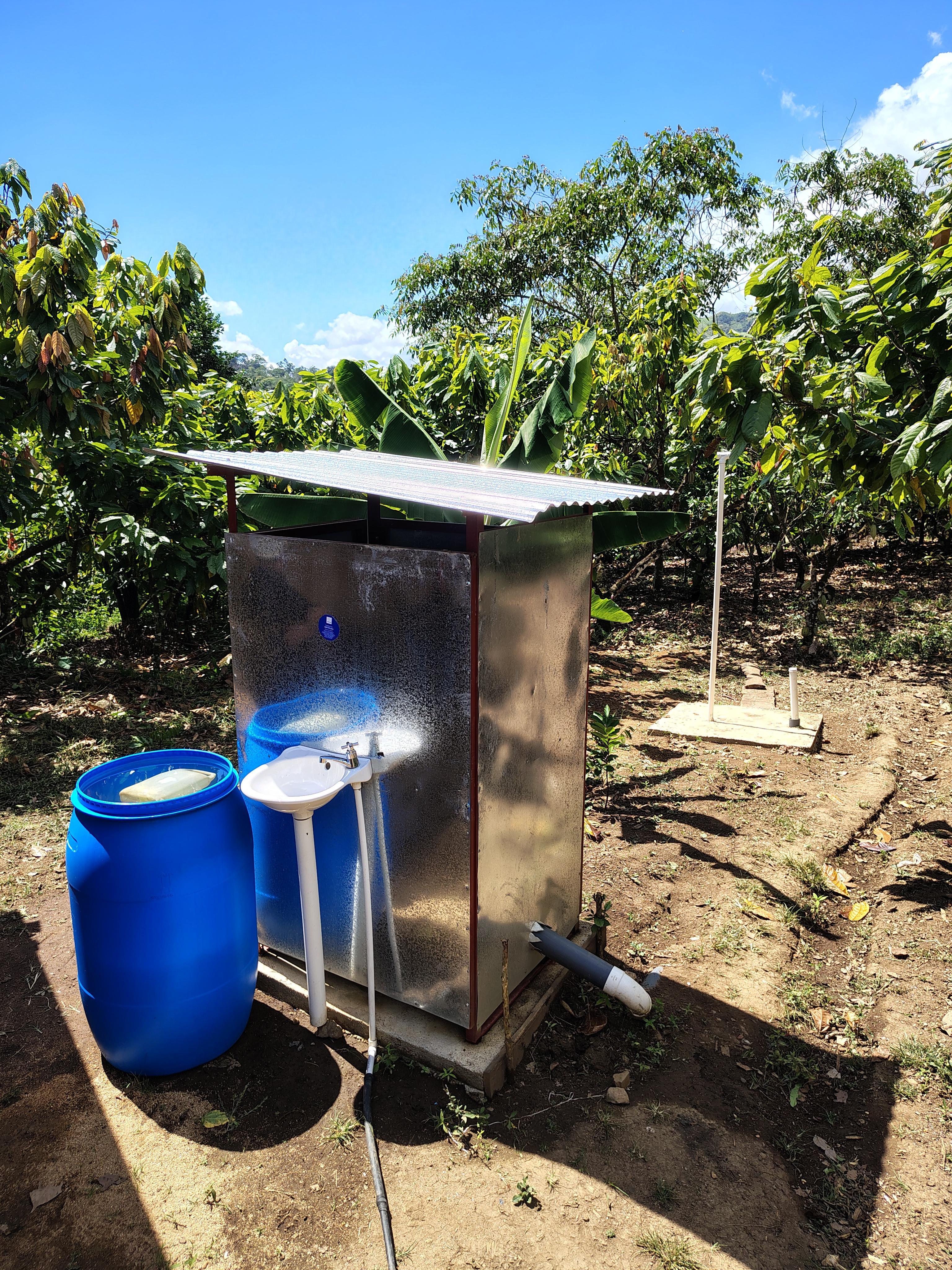
Access to safe sanitation presents another challenge. Without ecological latrines and septic tanks, wastewater can contaminate soil near cacao trees, potentially jeopardizing certification eligibility even for farmers who avoid chemical fertilizers and pesticides.
The ACES project addresses these interconnected challenges by helping households access solar electricity and ecological latrines. These improvements support healthier homes, protect the land, and help families pursue certification that can open doors to higher-paying international markets.
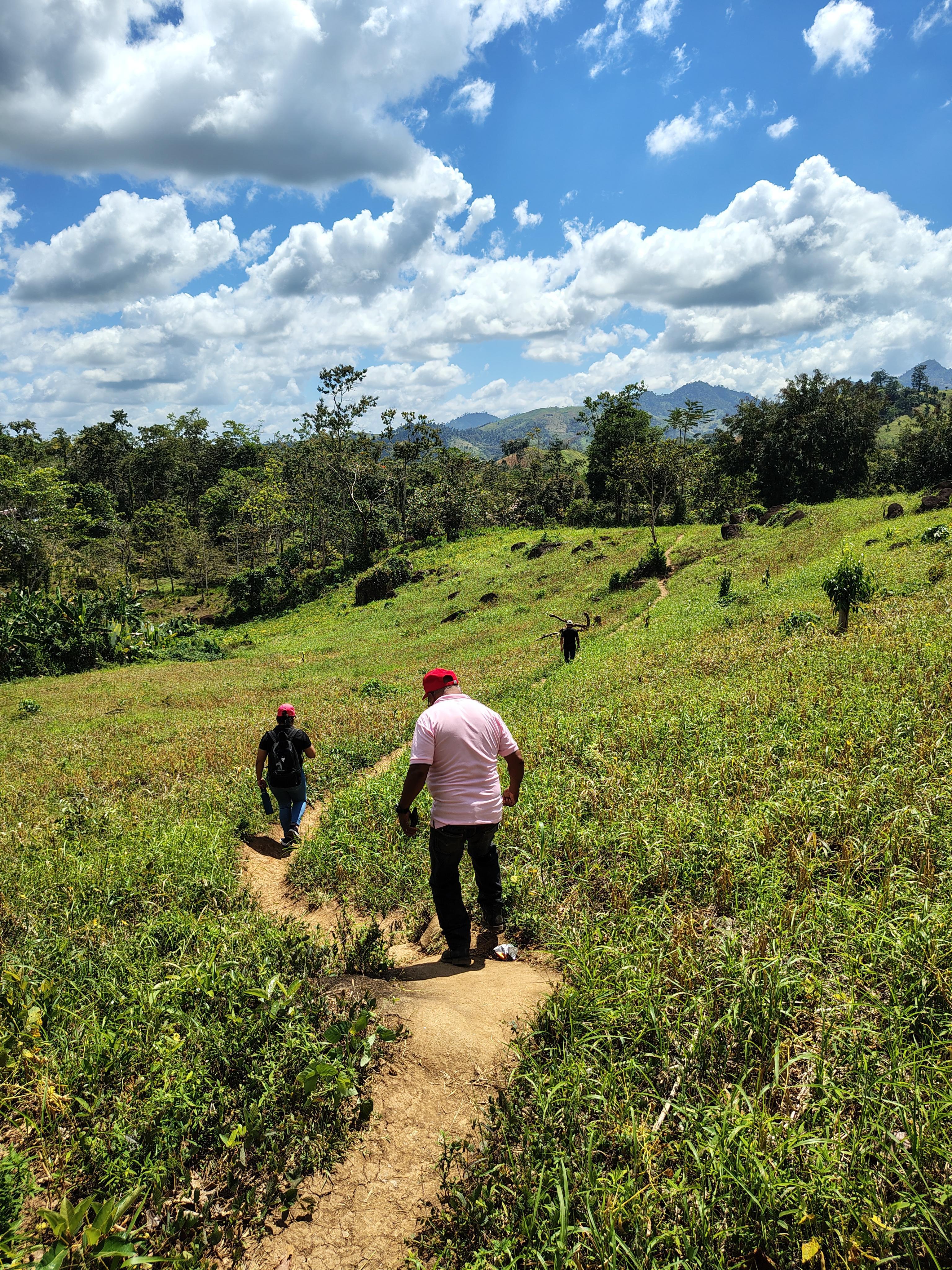
During a February 2026 visit to Waslala, we saw firsthand the promise of the 2025 pilot. However, heavy seasonal rains made some communities difficult to reach, increasing transportation costs and leaving nine families still waiting for ecological latrines.
Quixote Center has once again partnered with PeaceWorks and Green Empowerment to launch a new phase of ACES, reaching another 40 cacao-producing families across 24 communities. The nine households still awaiting latrines will be the first to receive them.
We look forward to returning to Waslala in November to meet new participating families and learn more about the project’s impact on their livelihoods and quality of life.
Quixote Center is delighted to continue our historical commitment to the people of Nicaragua through this program. Your support makes this work possible. Together, we’re helping families build healthier homes, protect their land, and create a more sustainable future for generations to come.
Add comment