
Imagine being so desperate that you stop eating.
That after everything, after the journey, the crossing, the detention, the waiting, and the violence, you look down at your tray of food crawling with maggots and think: No. Not anymore.
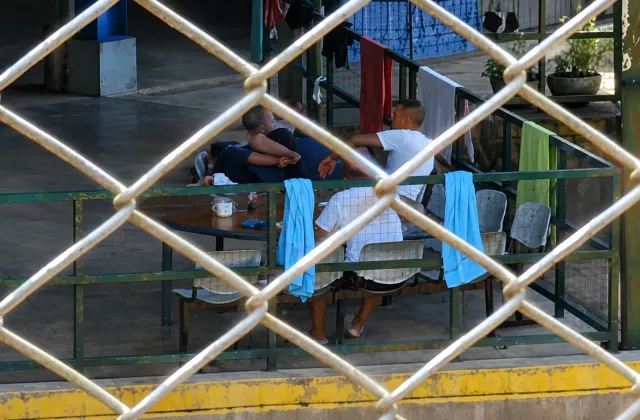
The hunger strike at Delaney Hall in Newark, New Jersey began on May 22, when roughly 300 detainees announced the coordinated strike to protest lack of medical care, inhumane living conditions, and rotten and spoiled food.
Members of Congress who toured the facility reported small portions frequently containing maggots, and medical care reduced to Tylenol. "They're living in jail conditions," said Rep. Dan Goldman after his visit, "and none of these people are criminals."
According to a press release from Detention Watch Network, a grassroots coalition supporting detained individuals and their families, their demands are clear:
-
An immediate in-person visit from Governor Sherrill to witness conditions firsthand
-
The release of medically vulnerable detainees including pregnant women and the elderly
-
Meaningful review of their immigration cases
-
An end to coercive pressure to sign deportation documents they do not understand
One participant said, "We are not criminals. We are fathers who don't want to be separated from our families. We will hold our hunger strike until our voices are heard."
When DHS Secretary Markwayne Mullin was asked about conditions at Delaney Hall, he said: "The fact is, we're giving them the calories they want. This isn't Holiday Inn." Words have power, and he chose "calories."
At the Northwest Detention Center in Tacoma, Washington, there have been repeated hunger strikes in 2026. Reports document maggots, hair, plastic, and rat feces in the food. Several of those strikes were by one man, whose ask each time was to see a dentist and be removed from solitary confinement. Each time he was denied. He also reports being abused by guards and receiving no medical treatment for these injuries.
In the family detention center in Dilley, Texas, the Associated Press reported that people described cloudy drinking water, delayed medical attention, and children held for months beyond the legal limit. The facility will sell them bottled water for $1.21. Human rights organizations are raising funds to pay for the water because for families with no income and no freedom of movement, clean water has become an impossible luxury.
ProPublica spoke with several children detained there. A 12-year-old girl wrote: "When I felt sick and went to the doctor, the only thing they tell you is to drink more water and the worst thing is that it seems like the water is what makes people sick here." Mothers described children who stopped eating after finding worms and mold on their trays, who couldn't sleep, and were sick for days with vomiting and diarrhea. Since reopening in March 2025, Dilley has held around 3,500 people, more than half of them children.
Negligence implies someone failed to pay attention. What is happening inside immigration detention centers is the result of deliberate policy, built for profit, and protected by power.
These companies are paid per person detained, per day. The food and medical budgets are line items and keeping them low expands the profit margin. GEO Group reported $2.6 billion in revenue in 2025. CoreCivic reported $2.2 billion. Both are actively reopening shuttered facilities, many of which closed amid allegations of abuse, to meet ICE’s growing demand. The cost of that growth is measured in rotten food, cloudy water, and people with cancer being treated with Tylenol. Investors are doing well. The people detained are not.
Every single person we have interviewed for our Between Borders video series mentions the terrible food in detention. Not in passing, or as a matter of preference. They talk about the food the way you talk about a scar.
Our earliest memories and comforts center around food. A warm bowl of soup, fresh bread baking, the sweetness of a perfect strawberry. Food is how a culture says you belong. How parents say I love you without speaking. Arepas made before sunrise, rice and beans that mean home. Your favorite cake on your birthday.
Food has always been a tool of control in places of confinement. It not only regulates the body, but it also speaks to the spirit. When what arrives on your tray is moldy, crawling, and unfit for any living creature; you are being told, with every meal, what you are worth to this country.
What we feed people tells us who we think they are. It shows if we believe their suffering matters. The US government has decided, in policy and in practice, that it does not. The hunger strikes are the answer to that decision. An undeniable insistence that a person still exists and still has the power to refuse. A hunger strike is what people do when everything else has been taken. They are demanding that we pay attention.
We should.