
The latest version of the US “war on drugs,” launched in February 2025, has worsened violence and undermined human rights. It now risks arming the very cartels it claims to defeat.
This strategy began with the State Department labeling eight Mexican and Venezuelan cartels as Foreign Terrorist Organizations (FTO). The US government then used that designation to justify deporting hundreds of Venezuelans to El Salvador’s CECOT mega-prison, including some with no criminal records, where reports of systematic abuse keep them trapped in a dangerous, lawless facility.
The government then escalated the violence. In September 2025, US forces began blowing up speedboats in the Caribbean and Eastern Pacific, claiming, without evidence, that they carried narcotics. The strikes have reportedly killed close to 200 people. The known survivors are mostly poor, young fishermen struggling to support their families.
At around the same time, in contradiction to stated policy to combat “narcotrafficking,” the President of the United States pardoned former Honduran President Juan Orlando Hernández, who had been convicted of trafficking more than 400 tons of cocaine into the United States. Maintaining the contradictions, weeks later, US special forces captured Venezuela’s president in Caracas and brought him to face drug charges in US courts. Despite international outcry, the speedboat attacks continue and US leaders have publicly threatened military intervention in other regional countries, including Mexico and Cuba. Just this week, the US destroyed another boat in the eastern Pacific, making this the 58th boat attacked and 194 people killed.
The human cost of this strategy is stark: extrajudicial killings, opaque detentions, and little transparency about victims’ alleged ties to any designated cartels.
Meanwhile, the domestic crisis of addiction persists: the US still suffers more than 100,000 overdose deaths a year, 76% linked to opioids. Organized crime has grown powerful across the Americas through both drug and gun trafficking, taking advantage of lax enforcement of gun laws in the United States.
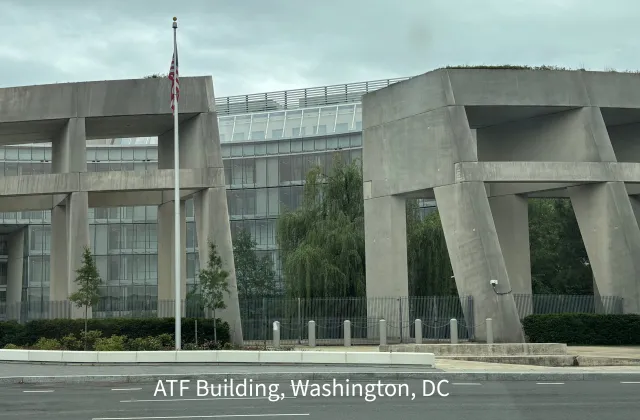
Recent proposals and administration budget cuts at the Bureau of Alcohol, Tobacco, Firearms and Explosives (ATF) risk fueling the problem. ATF has announced 34 regulatory rollbacks that would make trafficking weapons easier, including these new proposed rules:
-
Weakening the “Engaged in the Business” rule that targets unlicensed gun sellers at the source of 41% of trafficking probes from 2017–2021.
-
Repealing background checks for gun shows and off-premises sales, key loopholes traffickers use to move weapons to cartels.
-
Allowing guns to be mailed directly to buyers, creating a new trafficking channel.
-
Diverting ATF agents toward immigration enforcement, reducing dealer inspections and trafficking investigations.
-
Relaxing requirements for moving National Firearms Act weapons (including fully automatic guns prized by cartels) across state lines without prior ATF approval or notice.
At the same time, a proposed $425 million cut to ATF funding would blunt enforcement. With weaker controls and fewer investigators, cartels will access more US weapons, intensifying the violence, expanding fentanyl distribution, and deepening corruption and collusion between cartels and government officials.
An estimated 200,000 firearms are trafficked across the US-Mexico border each year. There are an estimated 500,000 weapons in Haiti, mostly trafficked from the United States.
ATF is inviting public comments to their proposed rule changes, and so far all the comments have been favorable. Quixote Center is sorting through the documents, and in the coming weeks we will share instructions and suggested language to help you weigh in with comments that reflect the contractions in this policy. Exposing policies that make no sense by submitting public comments is how advocacy works, and we aim to make that easier for you.
Quixote Center is also focusing on passing the ARMAS Act, which would require robust end-use controls on US firearms exports and create coordinated, interagency strategies to stop illegal gun trafficking. It would also help ensure US weapons don’t end up in the hands of corrupt officials or criminal groups that devastate communities across the hemisphere.
You can take action today by contacting your Representative and urge them to co-sponsor the ARMAS Act. We are also organizing advocacy days on this issue in September. More information to come later in the summer.
Thank you for making your voice heard.