




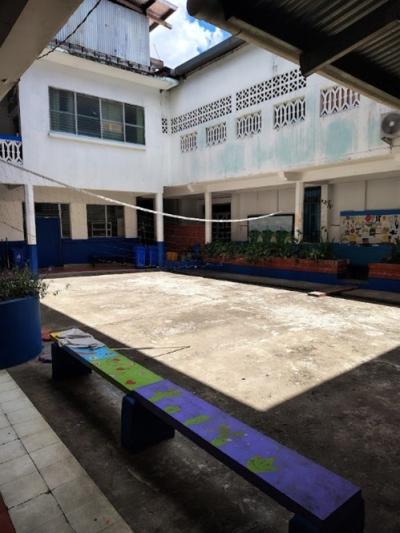
Quixote Center traveled to Panama from March 22-26 to meet with our partners at the Red Franciscana para Migrantes (Franciscan Network for Migrants or RFM in Spanish) and assess the current situation in the country. Panama continues to be a major transit hub for people seeking a better life or to reunite their family.
People migrate for many reasons. Most going through Panama come from Venezuela, Colombia, and Ecuador to escape gang violence, hunger and political persecution. Deportees from the US report dehumanizing violence at the hands of ICE and other US officials, who use disproportionate force against people who have lived peacefully in the US for years. We met a Venezuelan family separated by the US government, sending a father to Tapachula and his son to Villahermosa in southern Mexico, after brutalizing them senselessly.
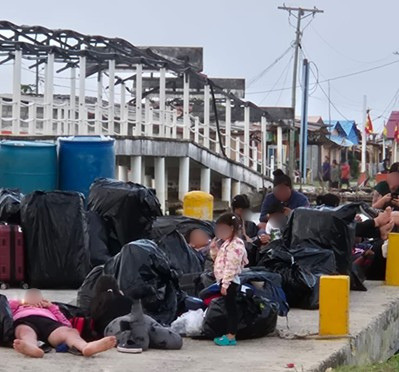
Although local authorities and international organizations have closed their operation in the Darien jungle, a few people are still trekking northbound through this route every day, albeit 99% less than in 2024 when it became a major migratory corridor. Today, most people on the move are traveling south, crossing the border from Costa Rica. Instead of arriving one by one, they now travel as larger groups, presenting themselves as “one big family.” Migrants form these groups along the way for security and protection from bandits and abusive officials.
Panamanian authorities channel these groups directly to the Caribbean coast where they board speedboats in Colon or Miramar heading to Colombia. Immigration officers offer migrants “humanitarian transit” including free bus rides from Paso Canoas to make sure they don’t try to resettle in Panama. US taxpayers are financing this operation as part of the border externalization agreement between Panama and the US. RFM considers this strategy a form of deportation because migrants must sign papers that ban them from reentering the country for 5 years. The small fishing village of Miramar we visited last year did not manage to establish a humanitarian reception center for migrants. The community is conflicted, and owners of the speedboats profit from desperate people trying to reach a safe space for themselves and their families.
In February, one speedboat carrying 25 passengers, including small children, broke down in open sea and had to be rescued. The migrants were stranded on an island with nothing to eat or drink. Fortunately, the local parish reached out to RFM who acted quickly, thanks to Quixote Center’s support. They sent emergency funds to provide food to the traveling families until they can continue their journey. Our partners have become a main resource in protecting the safety, integrity and dignity of the migrant population transiting through Panama. Their center of operation, the Medalla Milagrosa shelter, receives new arrivals every day.
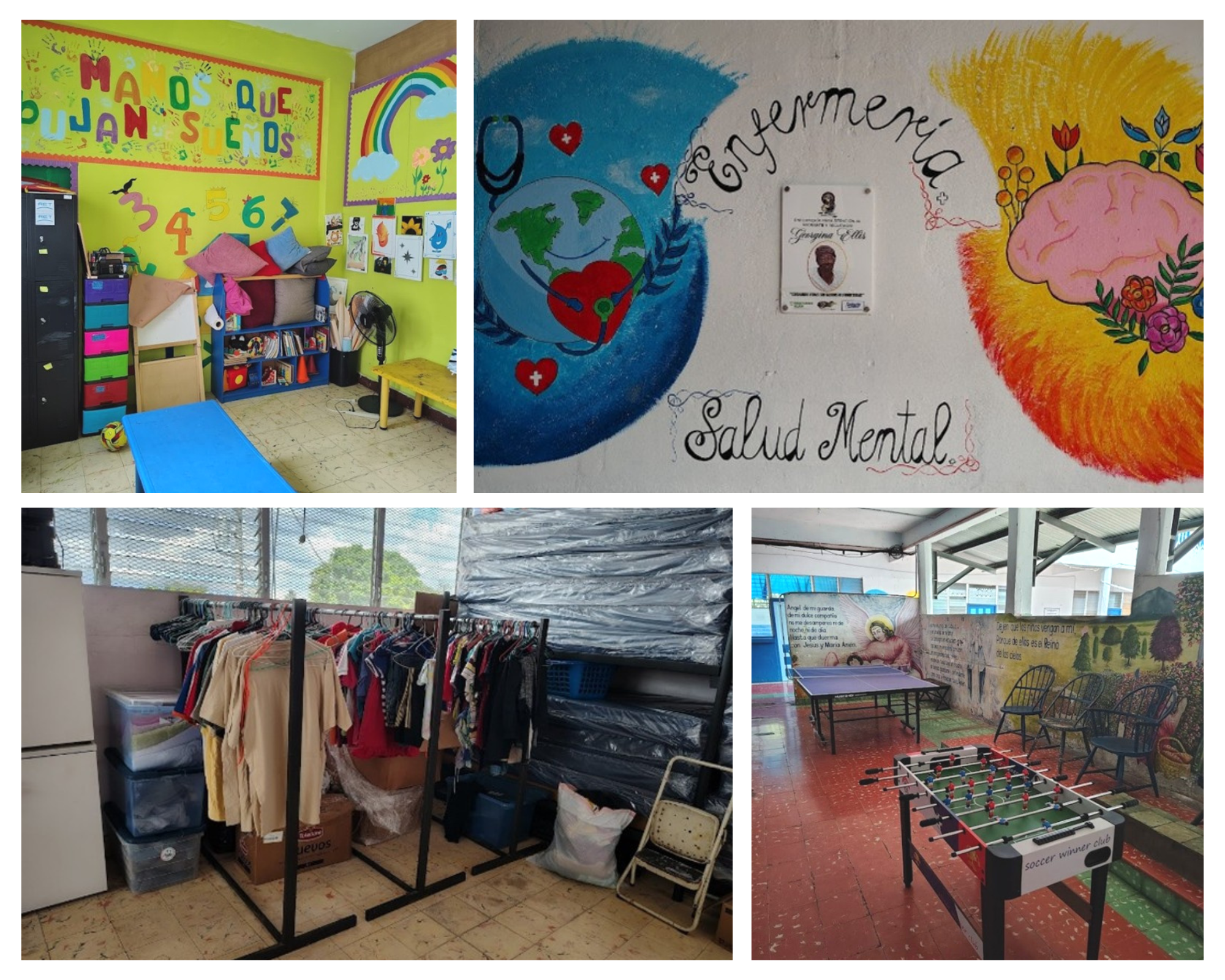
Located in David, Chiriqui, Medalla Milagrosa serves the most vulnerable: the sick, the injured, pregnant women, and families with young children who need to rest and recover. Guests can stay for a few days, or longer if their situation is complicated. Migrants receive three meals a day, clean beds, clothing, health care, safe spaces for their children, and kindness. Allied organizations and volunteers provide them with legal counsel and psychological support.
Resettlement is formally possible, but it is an expensive and arduous process, a challenge when many only own the clothes on their backs. Some have lost or expired documentation, including four asylum seekers deported by the US to Panama in March 2025 who had their passports taken by ICE and never returned. They are still in limbo under a humanitarian visa without the ability to work. Until they finally find the freedom they seek, they take refuge at Medalla Milagrosa.
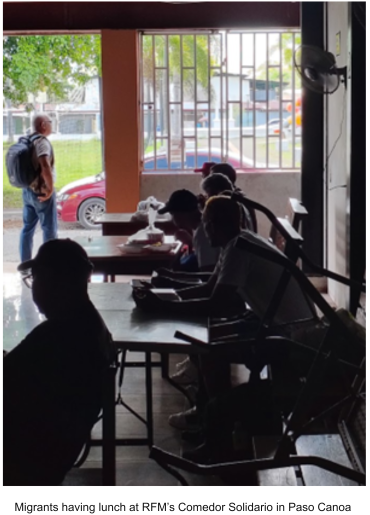
Panamanian immigration officers vet everyone, checking their biometric data and paperwork before they can check in to Medalla Milagrosa. RFM volunteers living at the border with Costa Rica orient transiting migrants to the RFM/Sisters of the Good Shepherd drop-in center in Paso Canoas where they receive more than just a warm meal. They offer the space to provide healthcare, vaccines, second-hand clothes and hygiene kits for toddlers. They also receive guidance and advice on their best path forward. Some continue their journey to the coast on their own or through Panama’s “humanitarian transit;” others get the chance to regroup at Medalla Milagrosa, some with the hope to resettle in Panama, and others to continue their southward journey.
Quixote Center heard horrific stories about state-sponsored abuses, mostly on the part of our own government. RFM Panama is currently training 16 volunteers in Paso Canoas to become certified human rights observers. In 2025, Quixote Center supported the train-the-trainers’ workshop for this 10-module human rights and nonviolence program for RFM leaders throughout the Americas. We are thrilled to see them propagate these best practices that will strengthen our advocacy to protect the rights and dignity for people seeking a better life in a foreign land.
With your support, Quixote Center will continue to support the efforts of our partners to provide dignity, humanity and shelter for migrants in Panama.
Comments
Martha pernia (not verified)
Los emigrantes son personas que le aportan un punto al país que llegan sea en cultura arte teatro cualquier oficio o religión el venezolano emigró porque la situación política era cada día peor aquí dejaron familia e igual que el colombiano la situación económica no era muy buena
Fred Schick (not verified)
Hola Martha, gracias por compartir. Tiene toda la razon, las personas que migran enriquecen los paises y comunidades que saben recibirles. Dejar tu pais de origen atras no es una decisión facil. La violencia fisica, politica, economica y social que muchas personas sufren los empuje a tomar este camino peligroso hacia la libertad.