


Fighting Cartels While Arming Them
The latest version of the US “war on drugs,” launched in February 2025, has worsened violence and undermined human rights. It now risks arming the very cartels it claims to defeat.

Quixote Center works to defend the human rights and dignity of the most vulnerable by influencing U.S. foreign and immigration policies, through educating our supporters, allied organizations, and government officials, and through actions directed at specific policies. Gun violence, extreme poverty and vulnerability lead families to make the heartbreaking decision to migrate to the United States or elsewhere. Our policy priorities address the root causes of migration in Haiti, Nicaragua and across Latin America and the Caribbean while our economic development programs protect their right to remain and prosper on their native land. We also defend the rights of migrants in the United States and work toward safe and non-exploitative legal pathways that recognize the important role immigrants play in our society and economy.
We educate our constituencies through:
Quixote Center impacts policies through:
You can view a recent webinar on Weapons Trafficking to Haiti here.
Click here for our latest action.

The latest version of the US “war on drugs,” launched in February 2025, has worsened violence and undermined human rights. It now risks arming the very cartels it claims to defeat.
Fifty years ago Bill Callahan and Dolly Pomerleau founded Quixote Center with a dream to be a progressive faith-based center for challenging injustice. Our founders were influenced by liberation theology and animated by a commitment to solidarity with the vulnerable and
marginalized, within the Catholic Church and in society. They dreamed the “impossible
dream” of a world more justly loving, armed with the faith that their love and persistence
could make impossible dreams come true.
It starts with a notification. A headline flashes across the screen. It’s Haiti. Violence is escalating. A hurricane on the way. A migrant caravan. Another crisis breaking through.
A few days pass, and the alerts stop. The story slips out of view and disappears. What remains is an idea of crisis, without any context of what came before or what might come next.
by Claudette David, Quixote Center Board Member
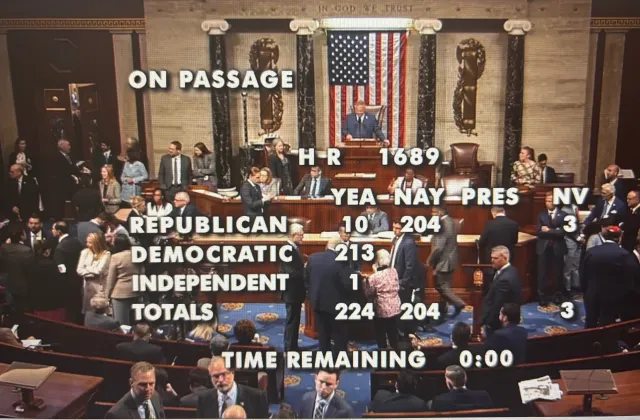
On April 16, 2026, the U.S. House of Representatives passed H.R. 1689 to extend protected status for Haitians and it did not happen quietly.
It started with a discharge petition, H. Res. 965, led by Representative Ayanna Pressley (MA-7). What followed was a succession of floor votes that included officially discharging the petition and a bill passage back to back. That alone is rare. That kind of moment does not come often.
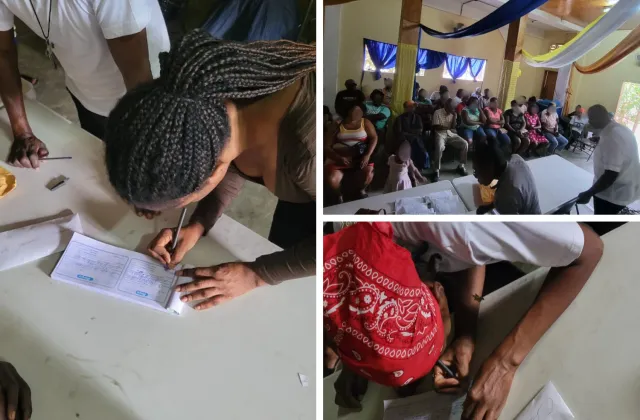
The people of Haiti are suffering. Violent criminal gangs perpetrate kidnappings, sexual violence, murder, and child trafficking. Over half the country is facing extreme food insecurity and 1.4 million people are internally displaced. For comparison, Haiti is about the size of Maryland, so it would be like 11% of the population of Maryland displaced and without homes.
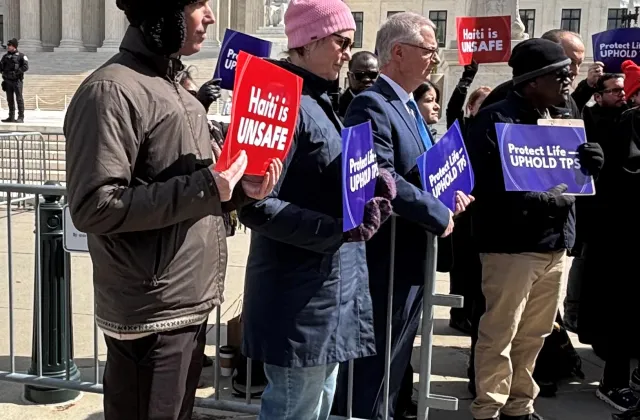
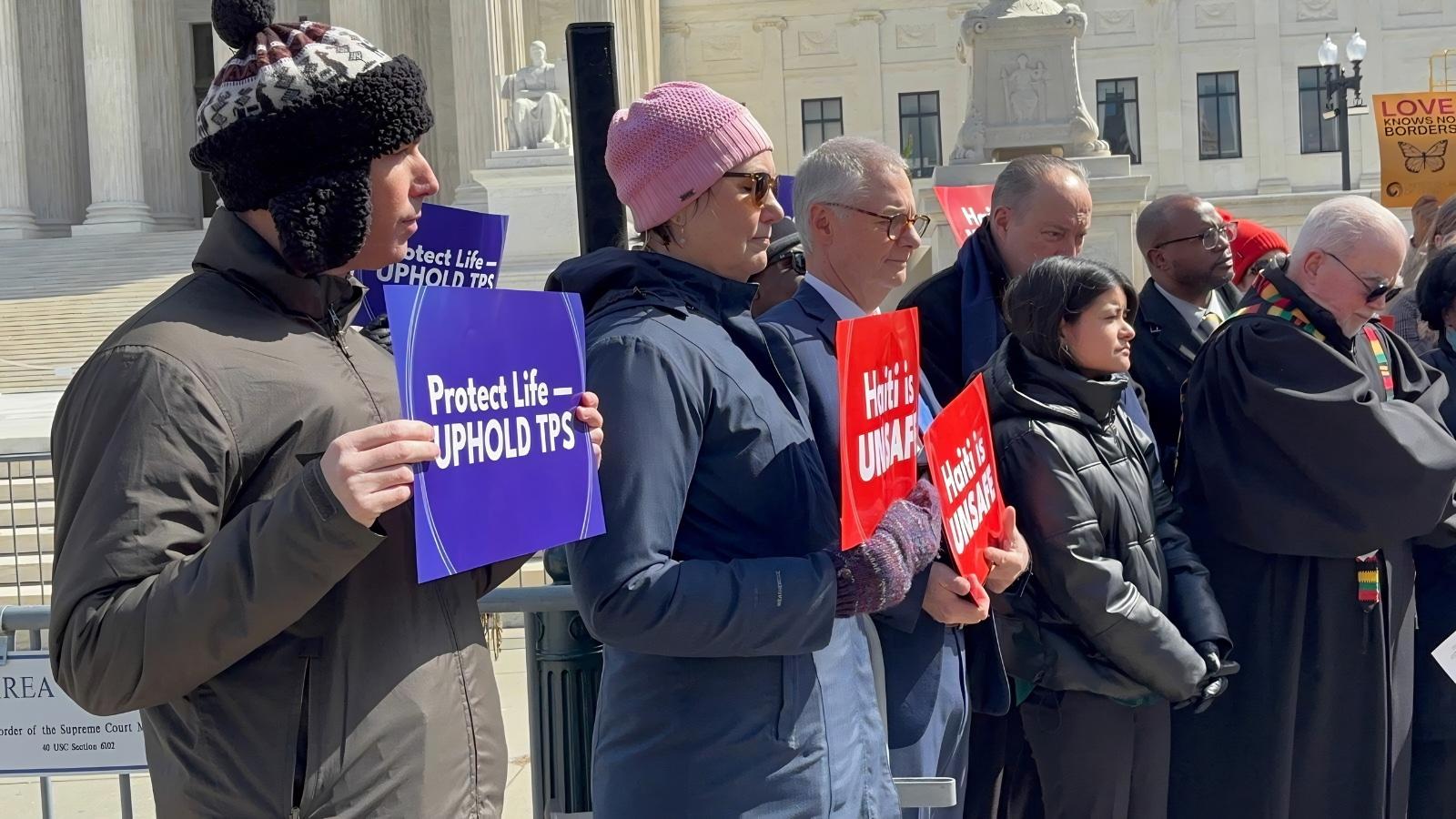
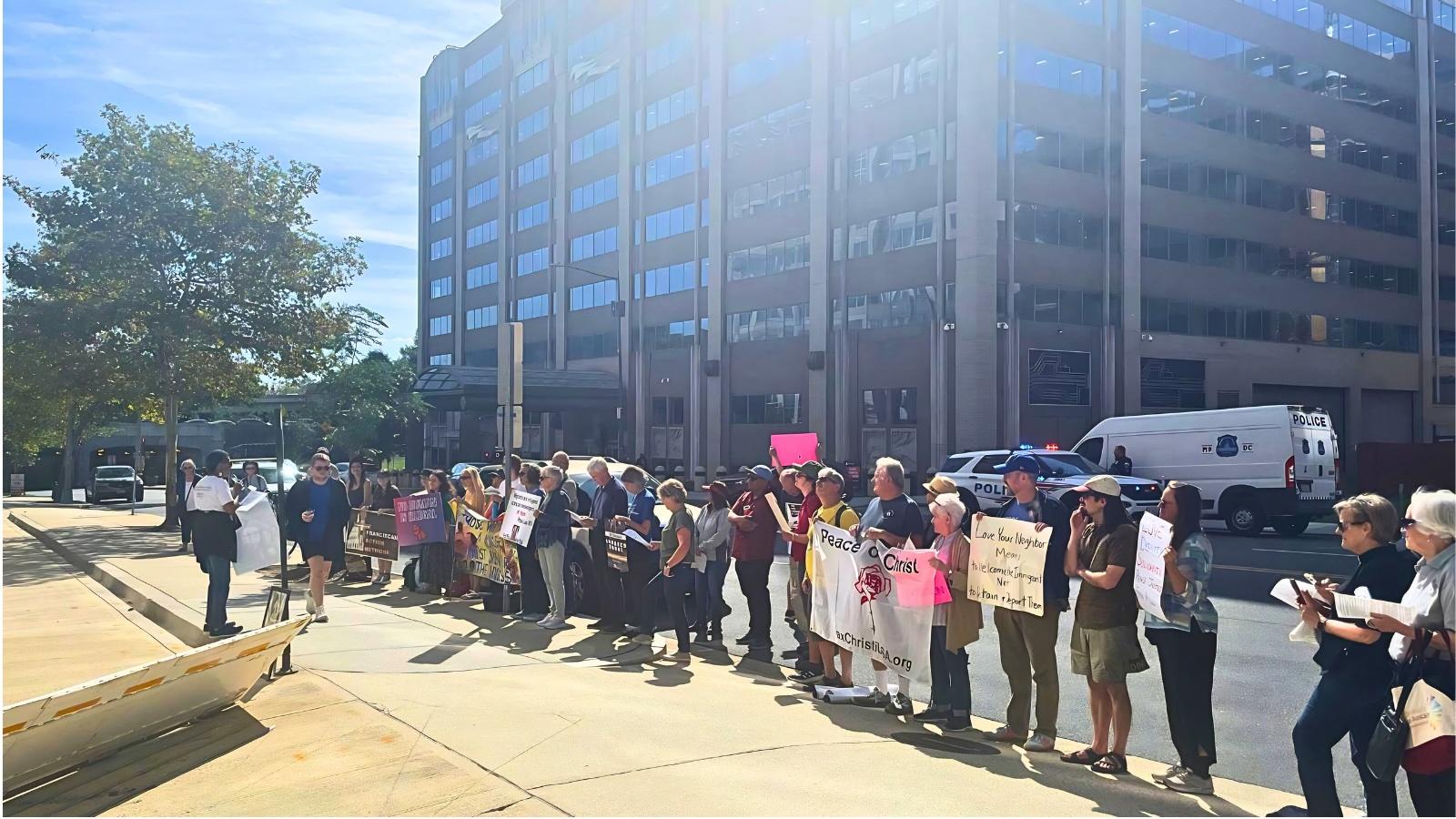
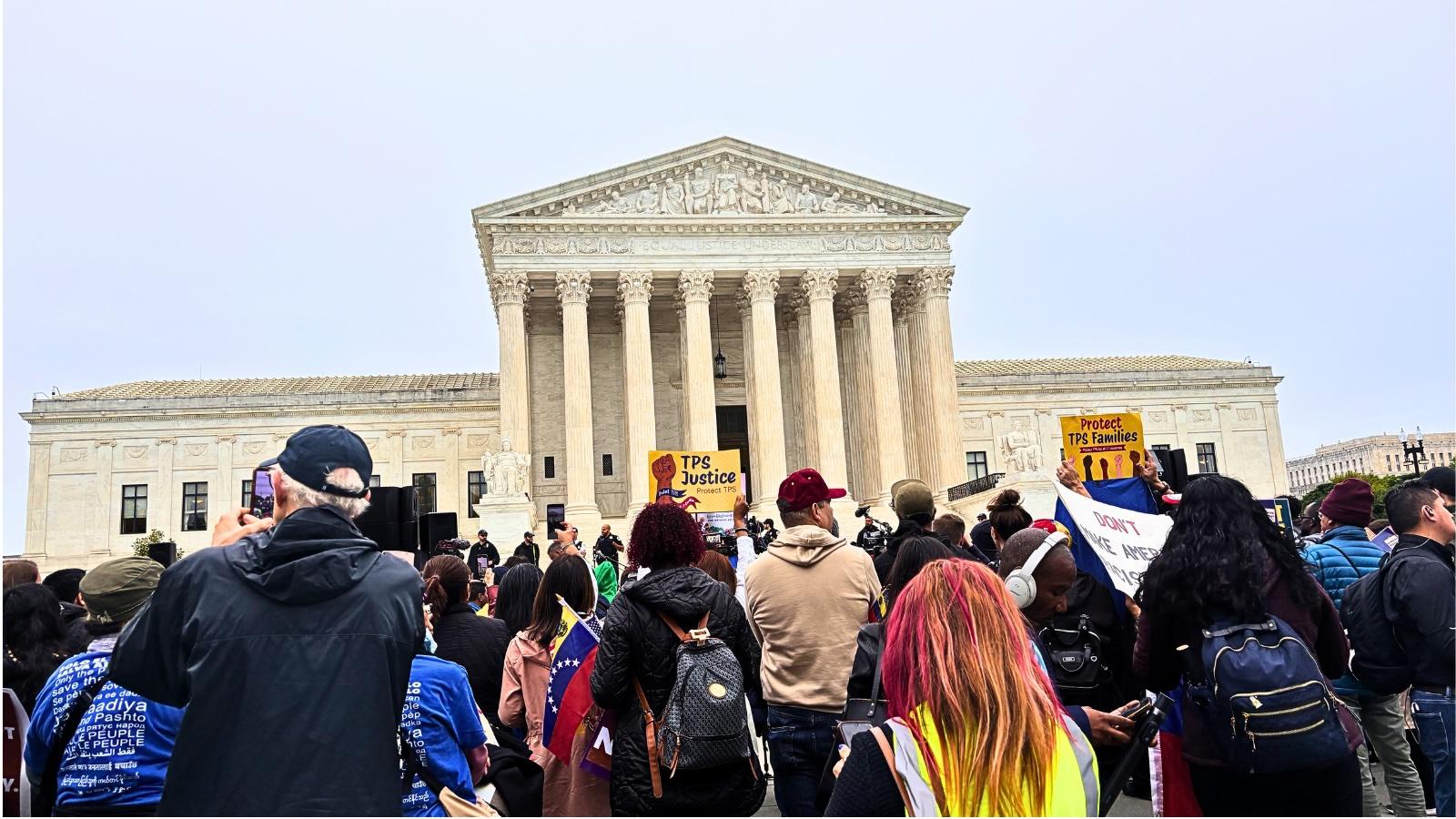
Temporary Protected Status (TPS) for Haitians is now before the Supreme Court, following a rapid series of legal developments over the past few weeks. Although the administration filed an emergency request on the Court’s shadow docket to lift protections immediately, the Court agreed to hear the case on its merits with full briefing and oral arguments in late April, with a decision likely in June. For the moment, TPS remains in place and deportations tied to ending TPS cannot move forward.

Last Tuesday evening brought a moment of relief many had been holding their breath for. In a decisive ruling, D.C. Circuit Court Judge Ana Reyes blocked the Department of Homeland Security’s attempt to terminate Temporary Protected Status (TPS) for Haitians. Her opinion stated plainly what has been evident for some time: the effort to end TPS was preordained and rooted in blatant racism.

Haiti remains volatile. According to the most recent report from the UN Security Council, there are now 1.4 million people displaced, 12% of the population, and 5.9 million people facing hunger, with 1.9 million facing extreme hunger. There are also alarming levels of sexual violence, with women and girls the primary victims.

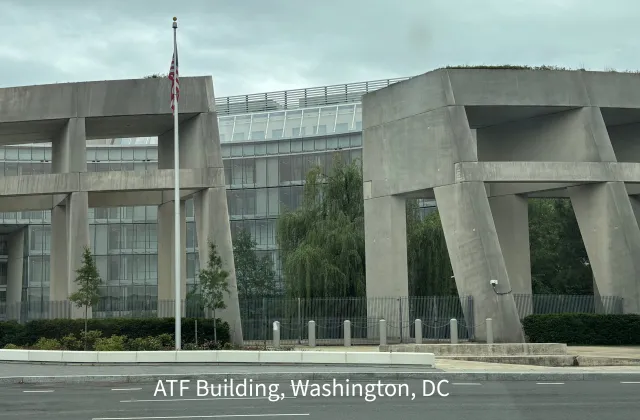
On January 6 the US Justice Department announced an indictment charging one US citizen and two Haitian citizens with conspiracy to smuggle goods and unlawfully ship firearms from the United States to Haiti.
The CLAMOR Network (Red Clamor in Spanish) is the Latin American and Caribbean Ecclesial Network for Migration, Displacement, Refuge and Human Trafficking who work in partnership with the Franciscan Network for Migrants and the Quixote Center. Below is the statement they published in the aftermath of the January 3rd attacks in Venezuela:
After months of blowing up speedboats under unsubstantiated allegations that these were carrying narco-terrorists, and after an unprecedented military build-up in the region, the administration has been threatening land operations unless the Venezuelan president resigns.
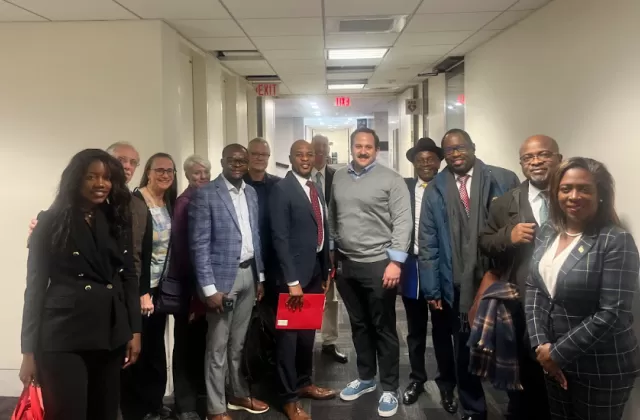
Time is running out for the 350,000 Haitians living in the US under Temporary Protected Status (TPS). Even though violent gangs control 90% of Haiti’s capital and large parts of the central region, the Department of Homeland Security announced on the eve of Thanksgiving the termination of TPS status for Haitians, effective February 3rd, 2026.